Futurism Branding Study

Futurism Branding Study
Pilot Flying J

Pilot Flying J

Client

Client

Branding, Experiential, Architecture

Branding, Experiential, Architecture

Services

Services

2023

2023

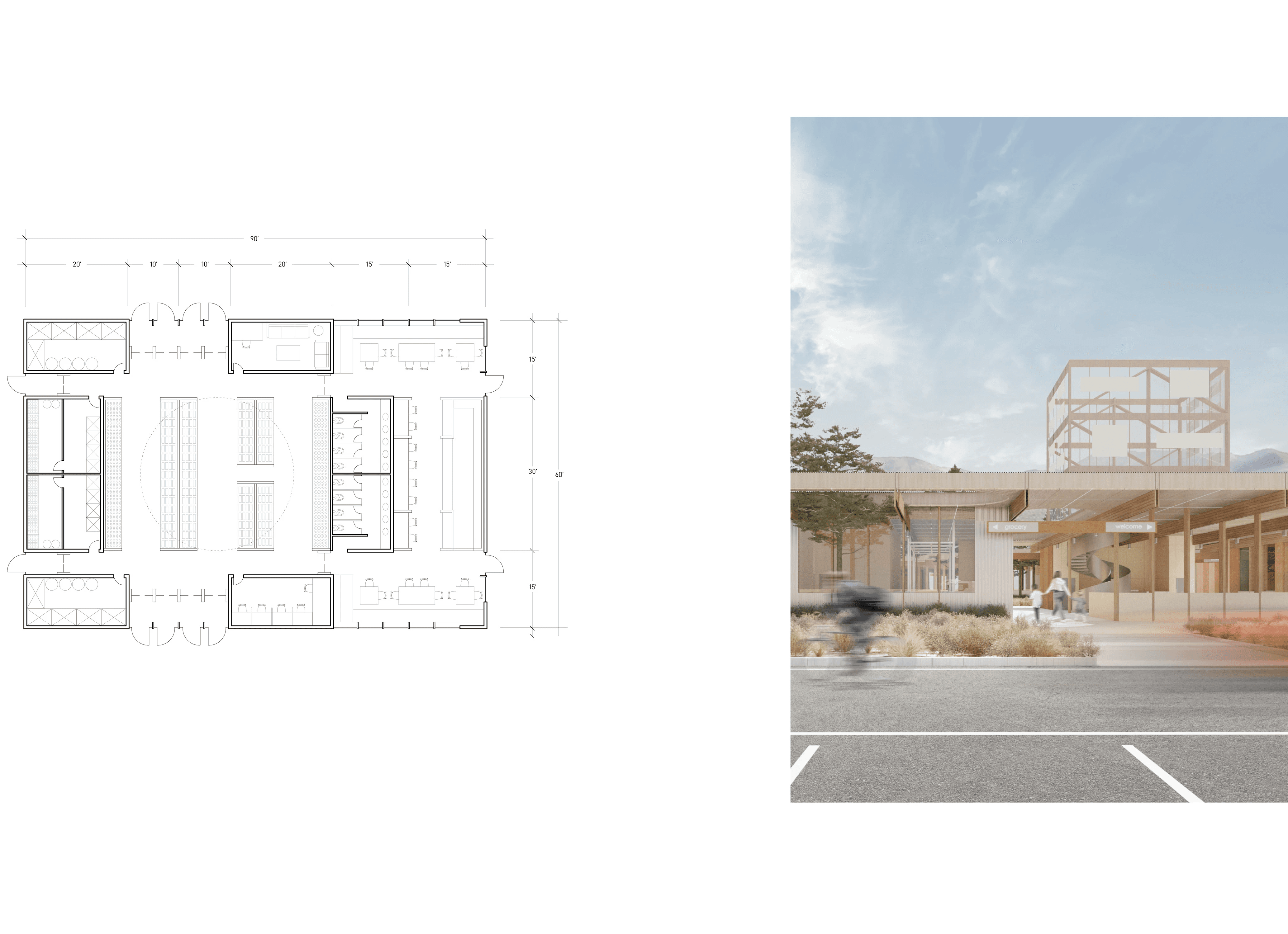
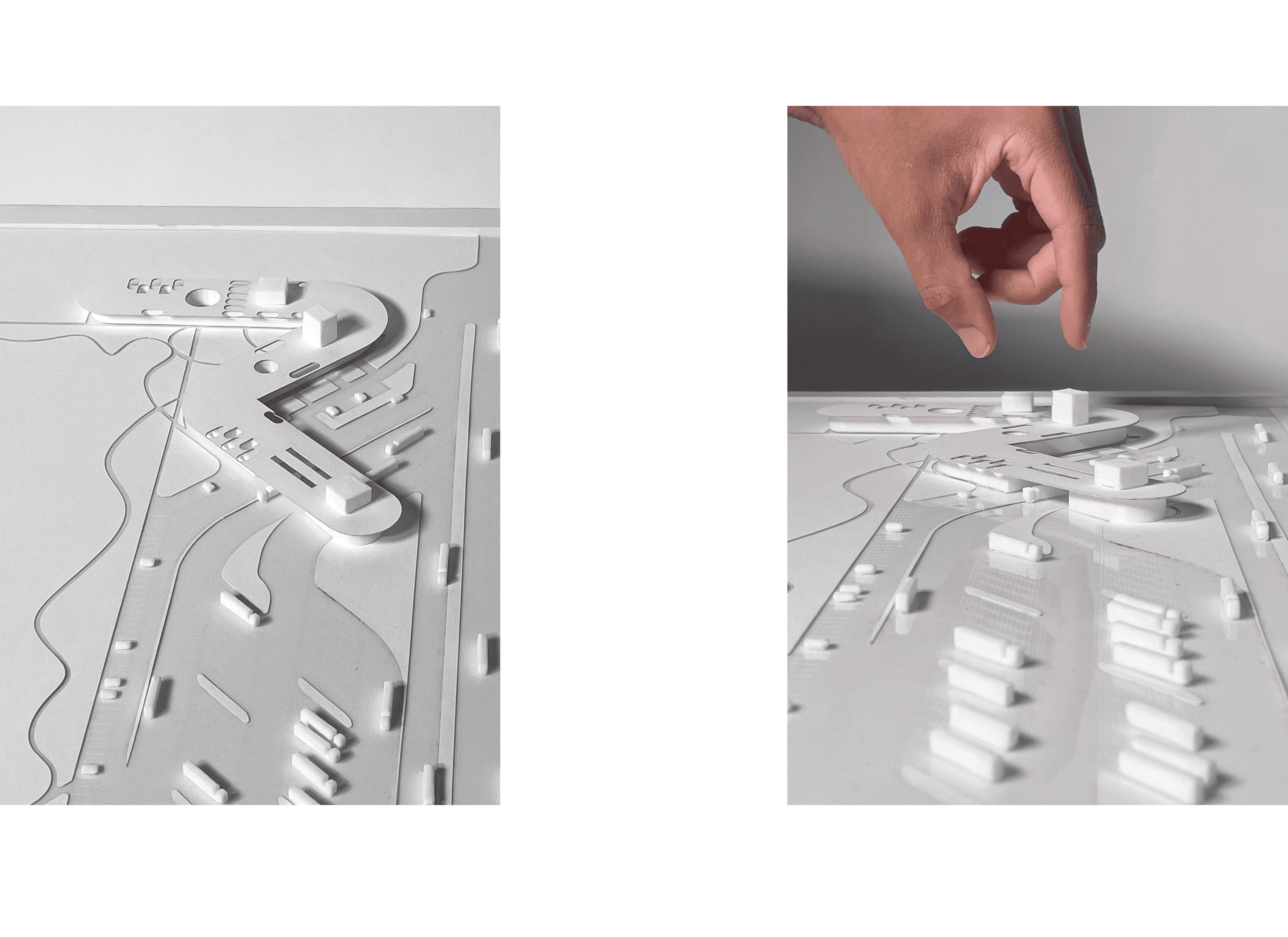
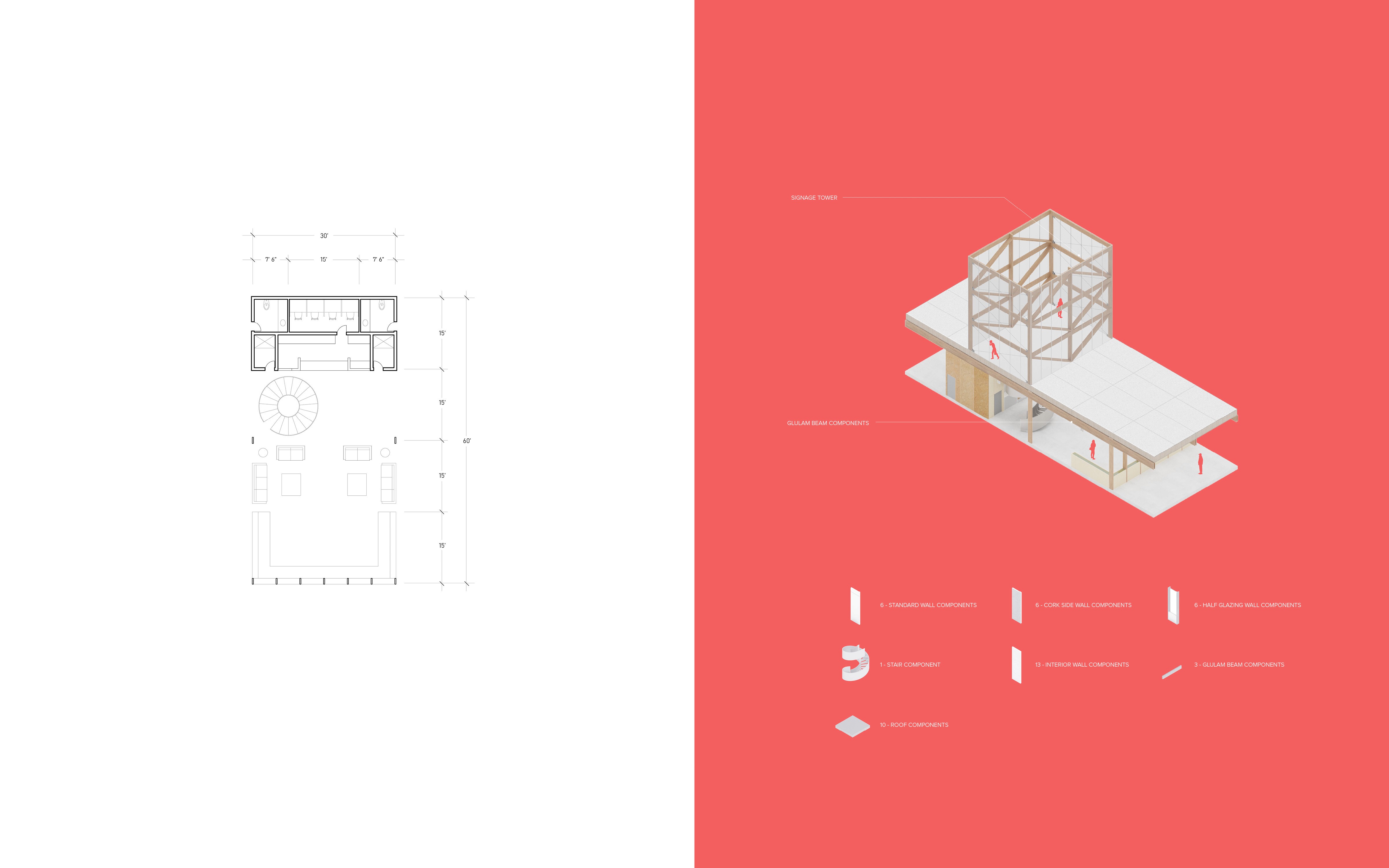
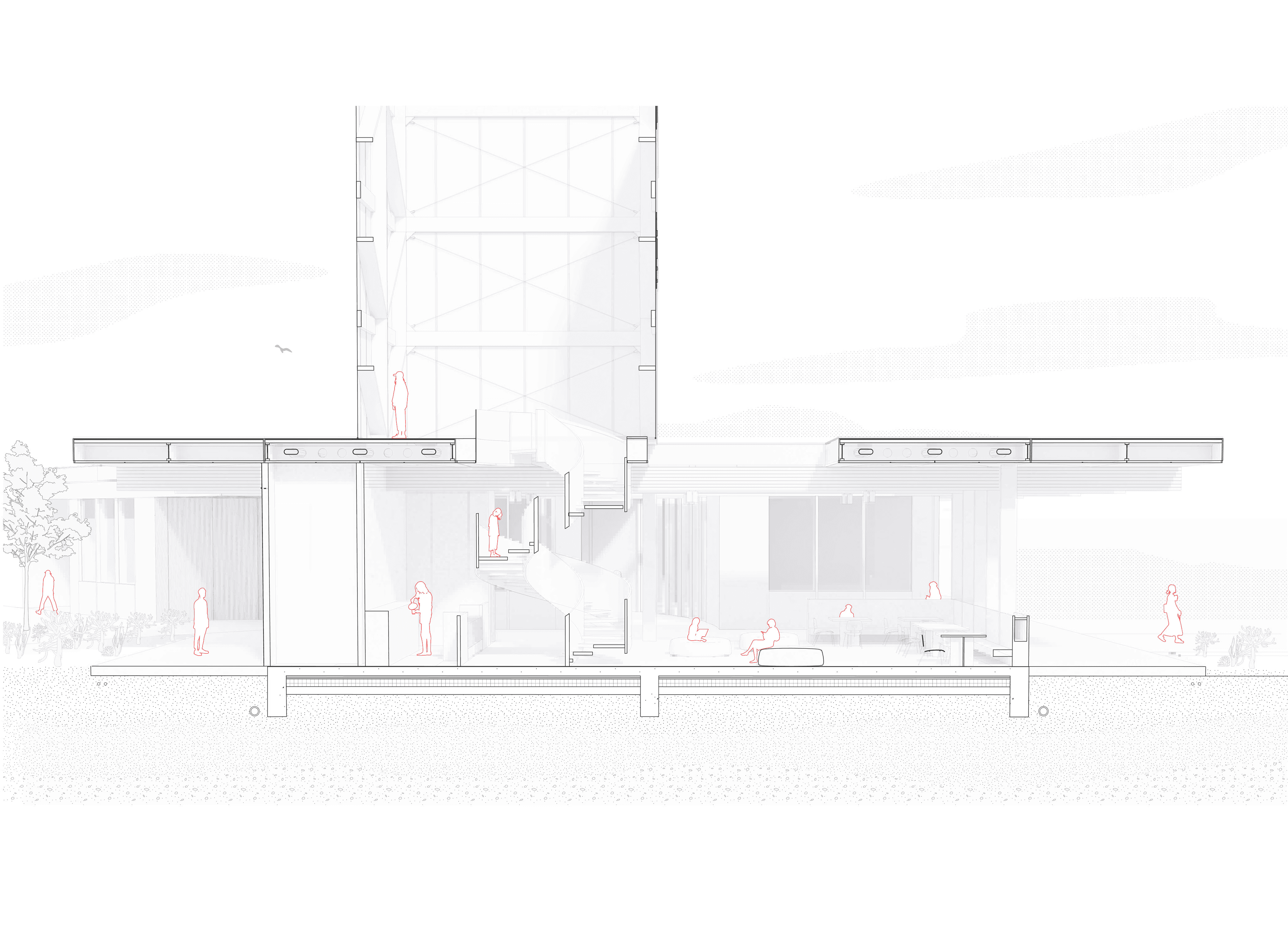
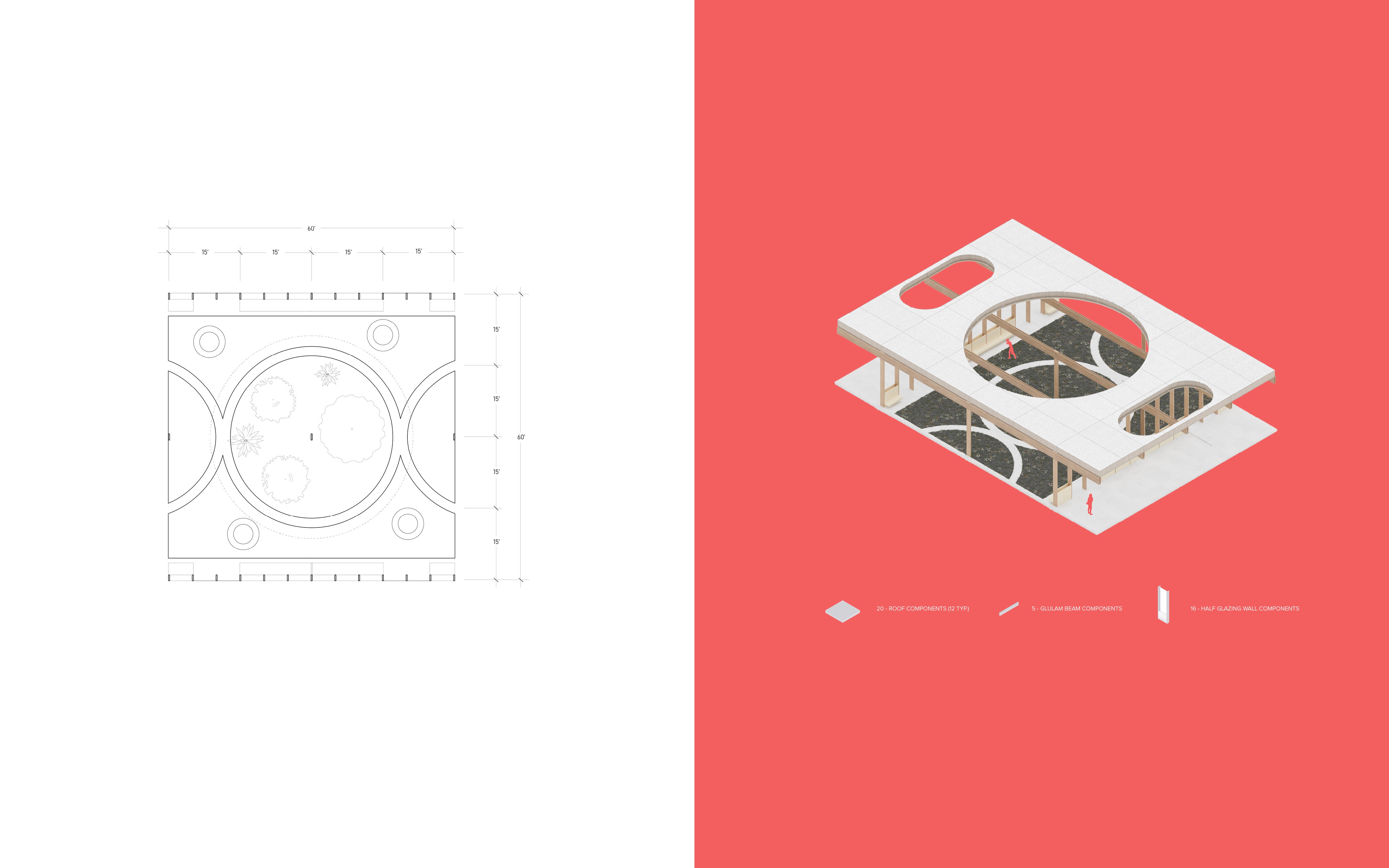
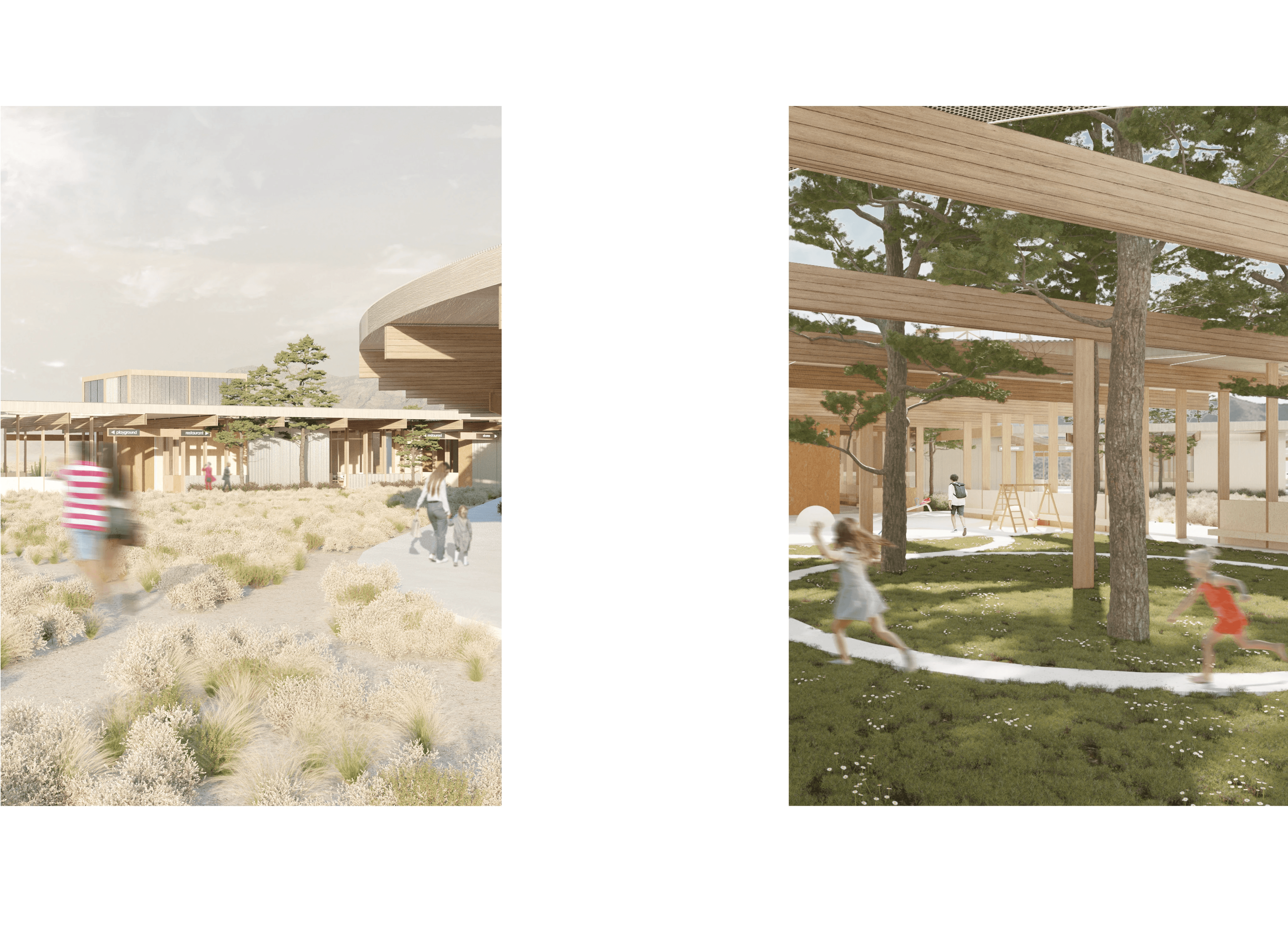
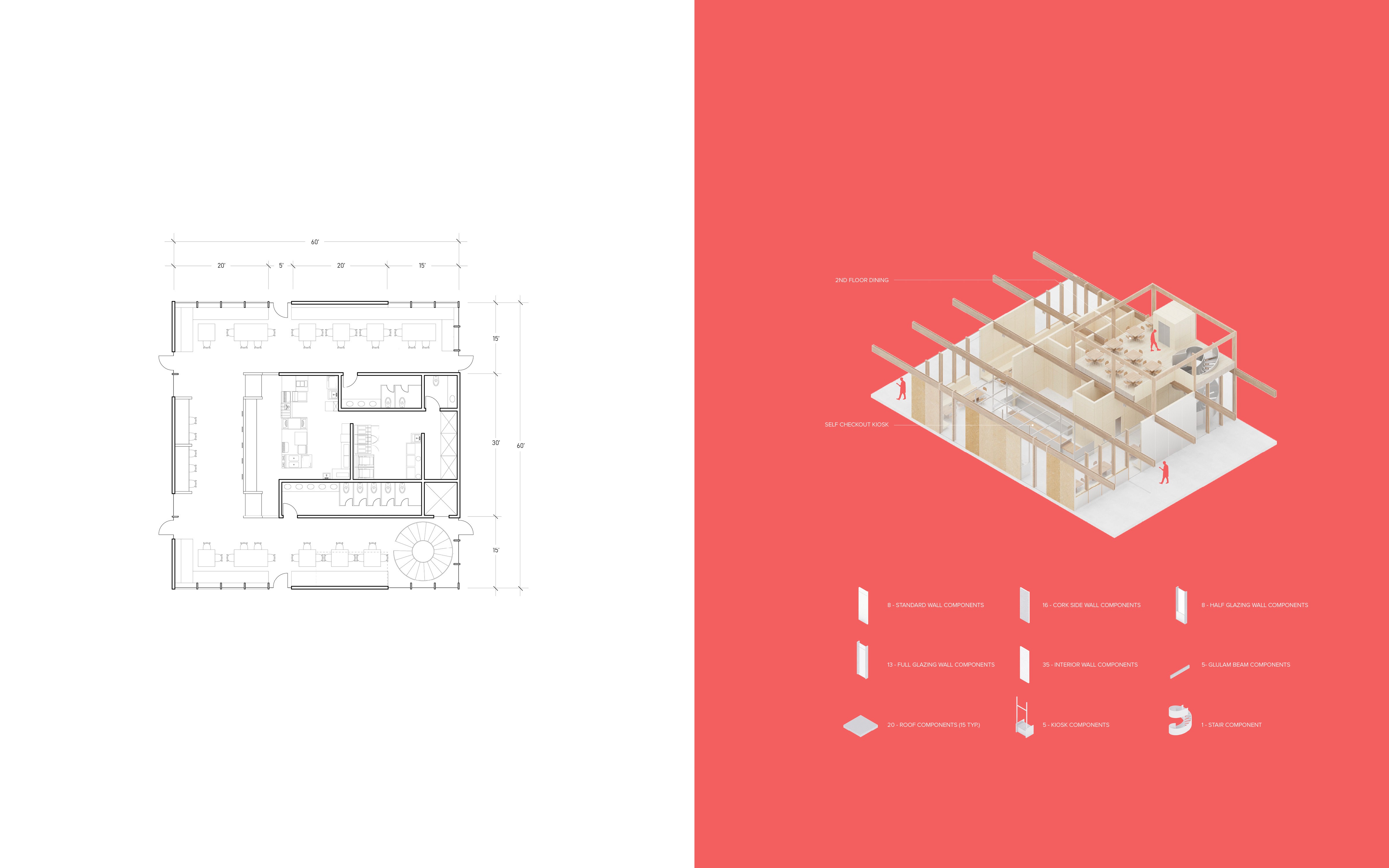
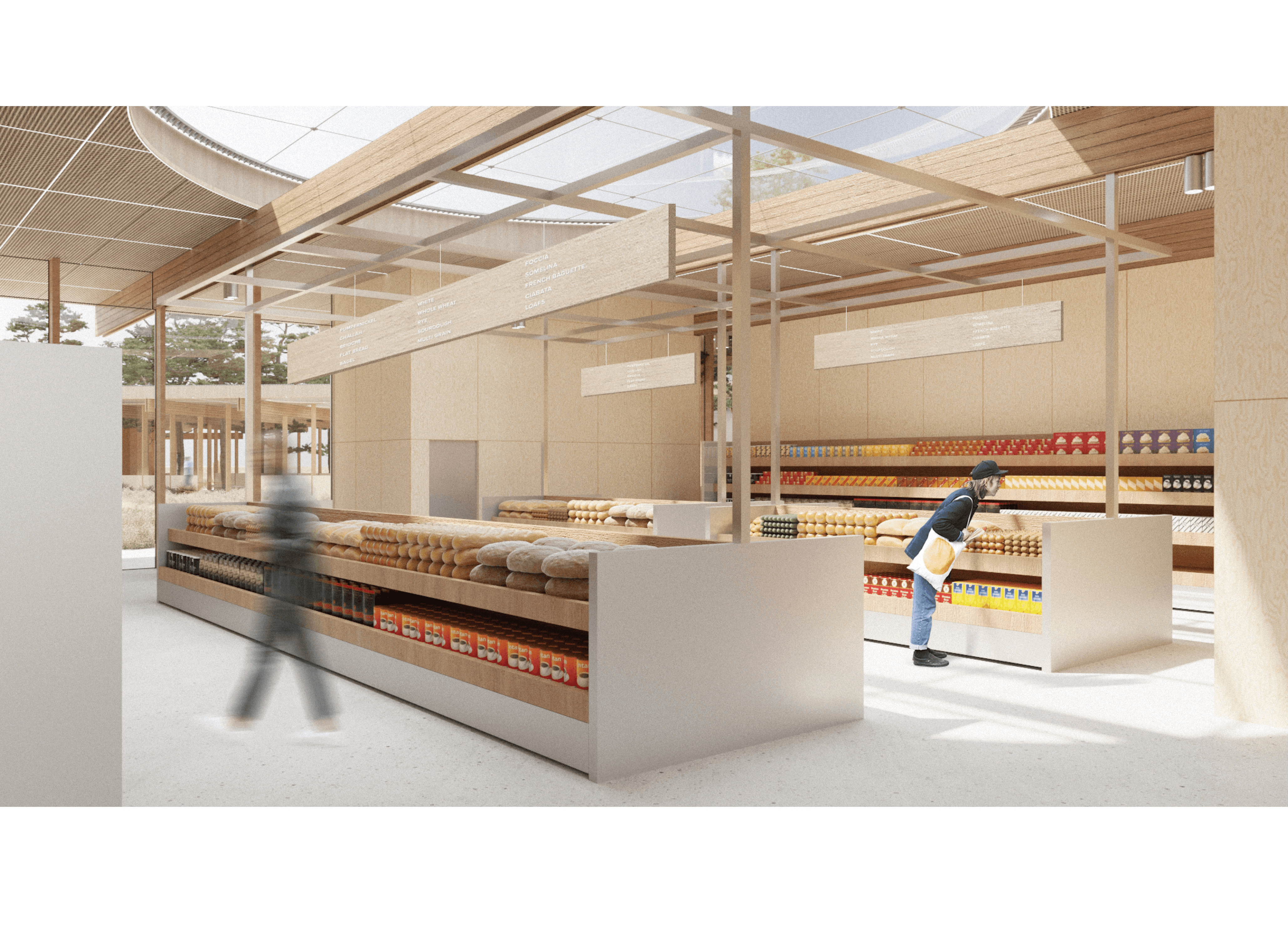
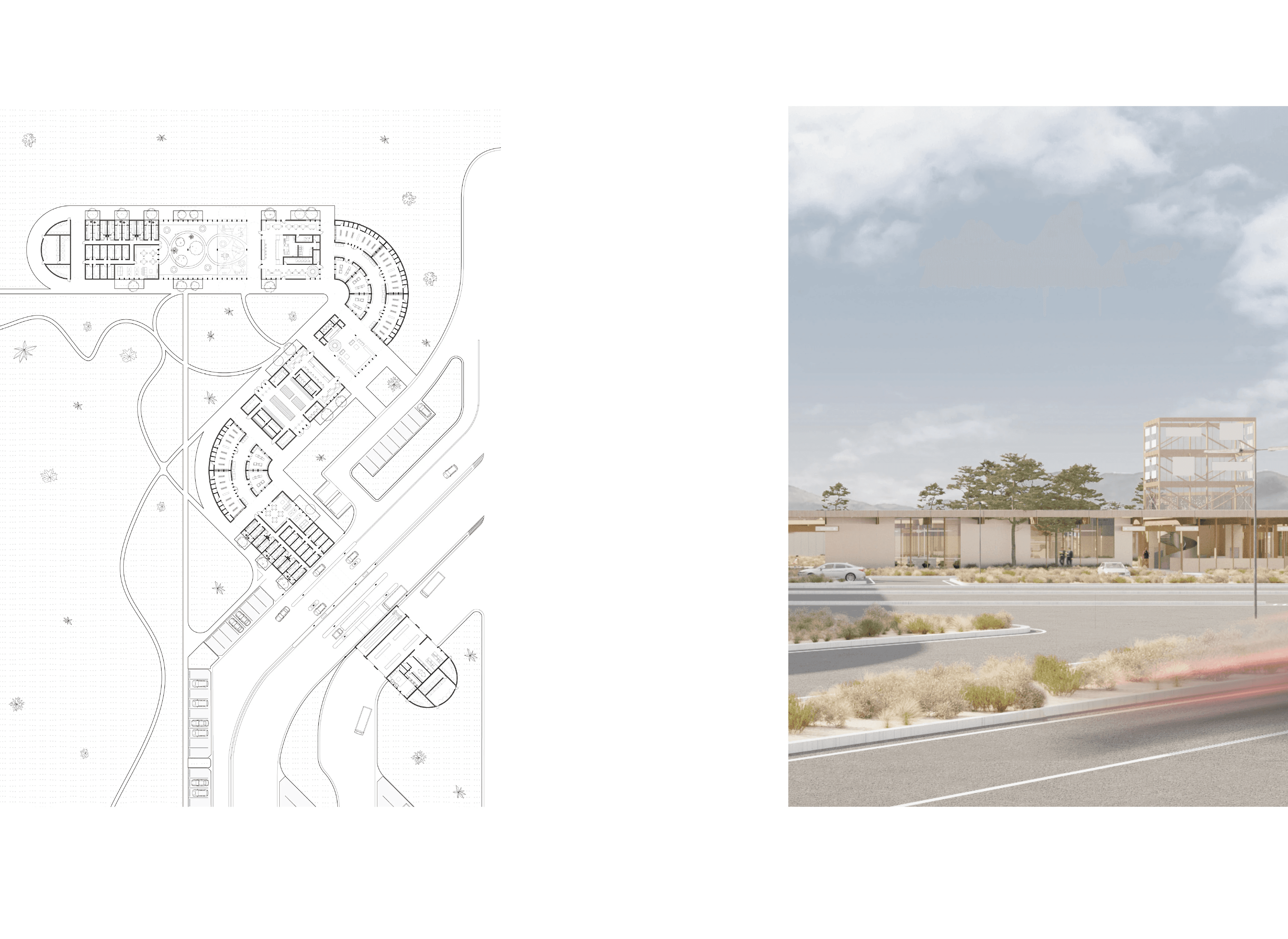
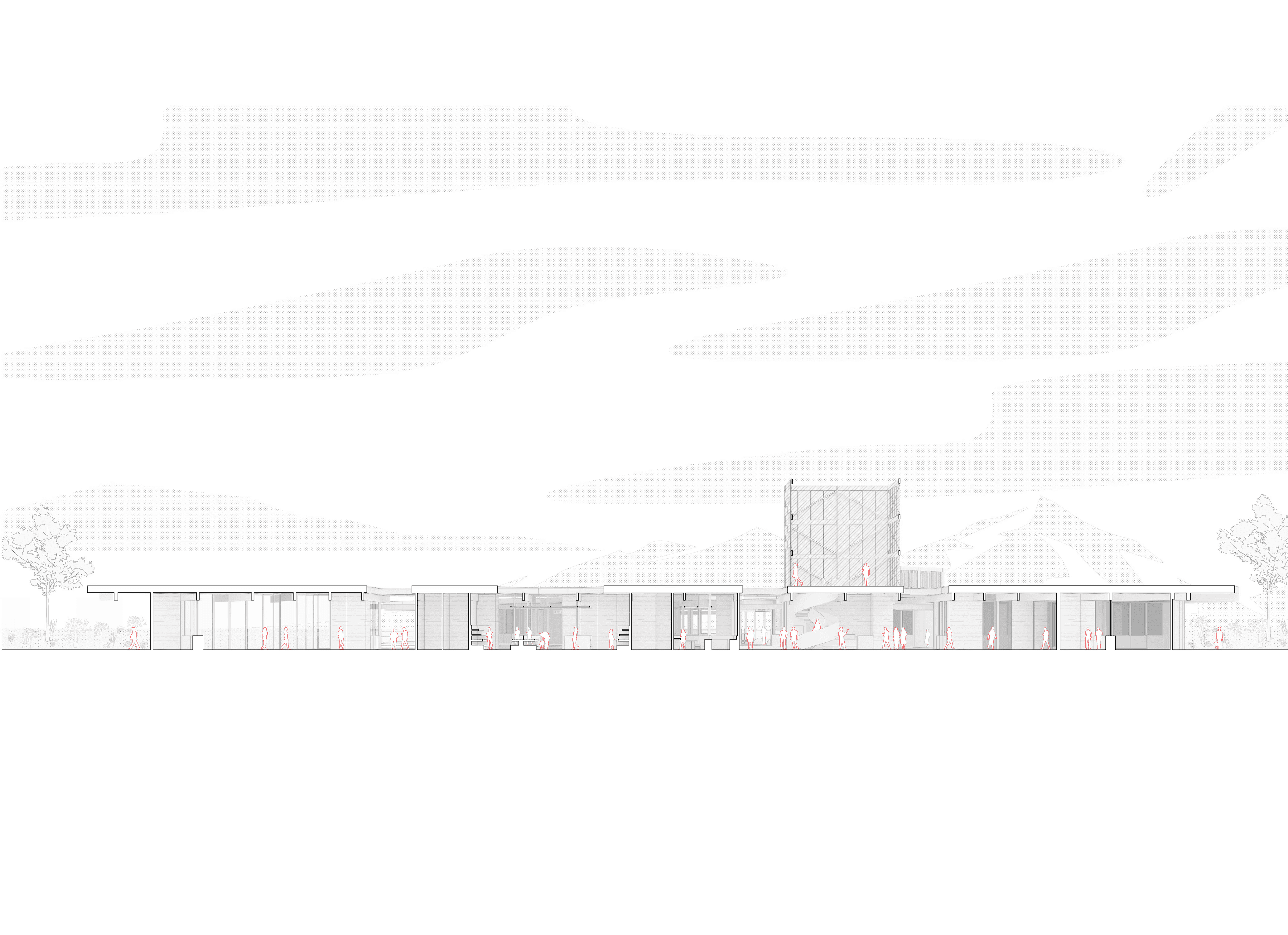
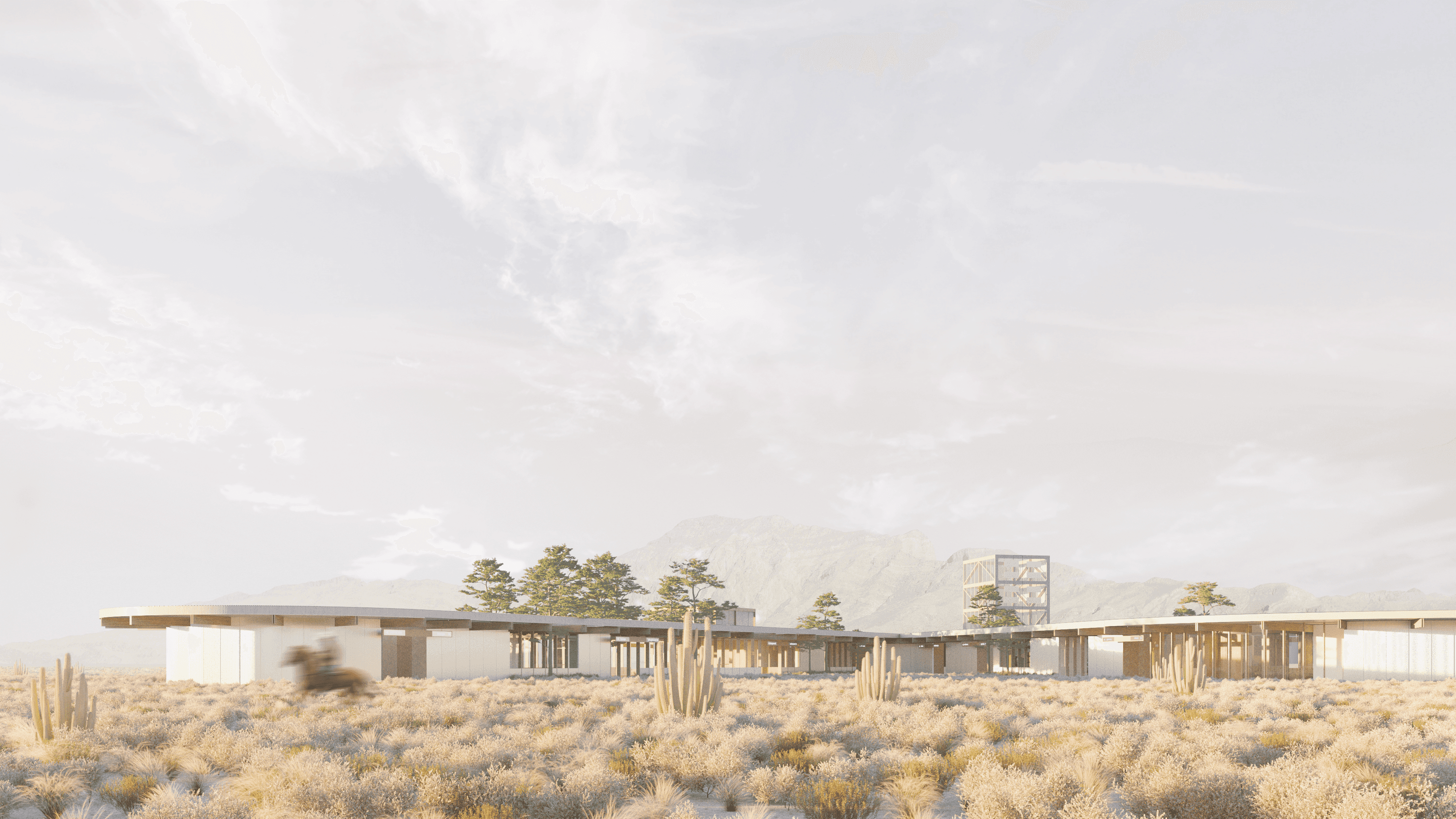
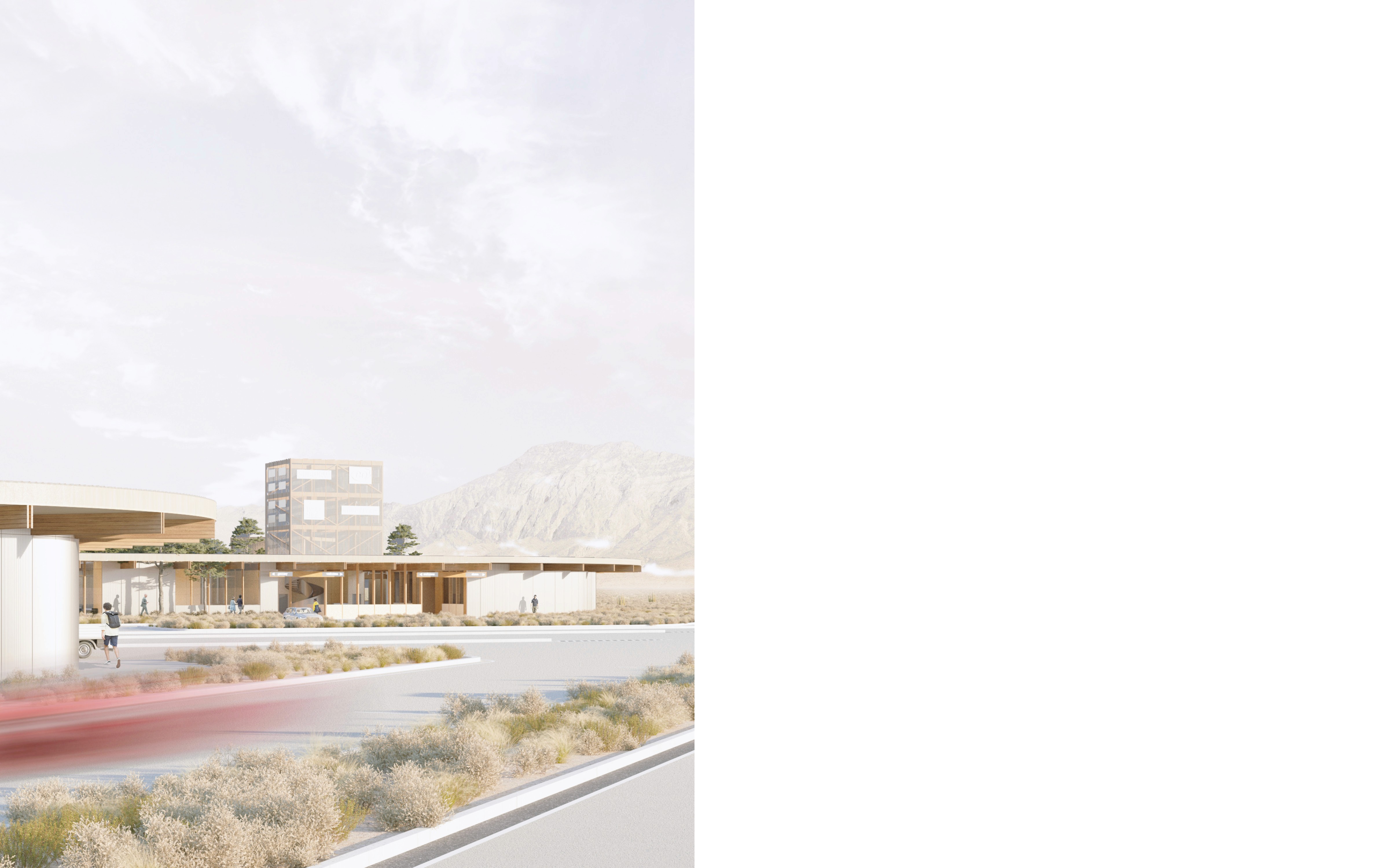
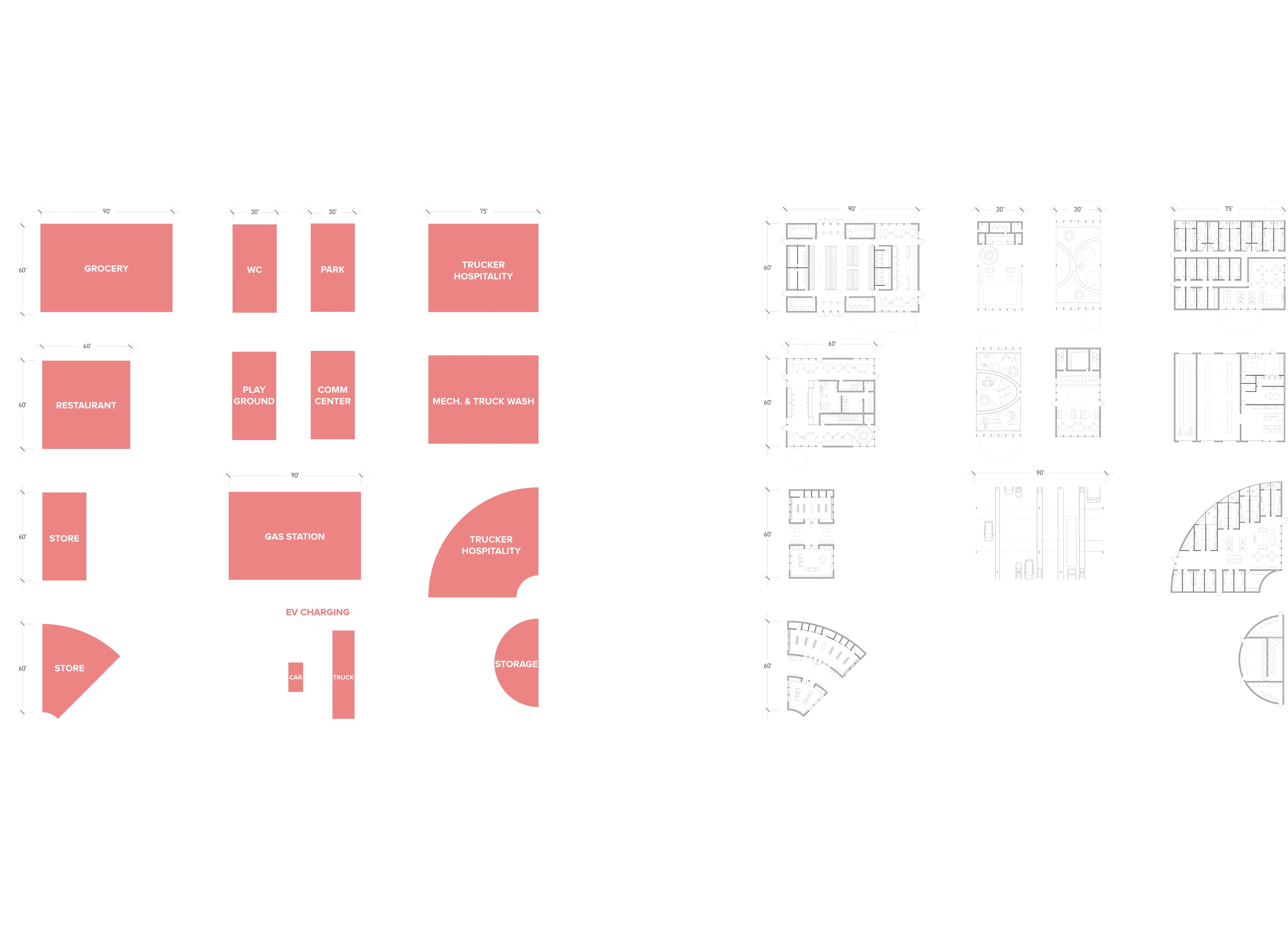
The shift to autonomous electric vehicles affects both passenger transportation and industrial logistics in fascinating ways. It's not just about how these spaces look, but about time: how long will someone stay? When does a gas station become a visitor center, a rest stop, or a hotel? How do these spaces work without human attendants? I looked at Pilot Flying J, a legacy brand with significant market share in travel centers, as an opportunity to redesign for 2030 and beyond. Challenge: Can you transform a purely functional, utilitarian structure into an architecturally significant place? Can we rethink what the programming of this type of building should be? Can it be economical and rapidly deployable? Approach: After traveling to San Francisco to learn about autonomous vehicles and visiting Tahoe Reno Industrial Center, one of the major logistical hubs of the West Coast, I identified two distinct user groups. There are travelers using cars, SUVs, trucks, and RVs who need 40 to 60 minutes to charge their vehicles. Then there are long-haul truckers who need places to sleep, shower, and rest for longer periods. I wanted to create a place where both could get the support they needed within their timelines. Both groups could also benefit from shared amenities: a vehicle service center, restaurants, and retail. All of this was designed as a repeatable, scalable system. Outcome: I created a flexible system that blends public and private uses, functioning as an extension of public infrastructure while serving commercial logistics. The core concept was a modular architecture that could adapt to any site. In a high-traffic location like Tahoe Reno Industrial Center, it would include the full range of components. In a less congested location, only the essential elements. The design focused on Tahoe Reno as the complete prototype. I developed standardized wall, floor, and roof components that formed repeatable building blocks. These components could be assembled into larger modules, fabricated in a factory, and shipped to sites across the country.

The shift to autonomous electric vehicles affects both passenger transportation and industrial logistics in fascinating ways. It's not just about how these spaces look, but about time: how long will someone stay? When does a gas station become a visitor center, a rest stop, or a hotel? How do these spaces work without human attendants? I looked at Pilot Flying J, a legacy brand with significant market share in travel centers, as an opportunity to redesign for 2030 and beyond. Challenge: Can you transform a purely functional, utilitarian structure into an architecturally significant place? Can we rethink what the programming of this type of building should be? Can it be economical and rapidly deployable? Approach: After traveling to San Francisco to learn about autonomous vehicles and visiting Tahoe Reno Industrial Center, one of the major logistical hubs of the West Coast, I identified two distinct user groups. There are travelers using cars, SUVs, trucks, and RVs who need 40 to 60 minutes to charge their vehicles. Then there are long-haul truckers who need places to sleep, shower, and rest for longer periods. I wanted to create a place where both could get the support they needed within their timelines. Both groups could also benefit from shared amenities: a vehicle service center, restaurants, and retail. All of this was designed as a repeatable, scalable system. Outcome: I created a flexible system that blends public and private uses, functioning as an extension of public infrastructure while serving commercial logistics. The core concept was a modular architecture that could adapt to any site. In a high-traffic location like Tahoe Reno Industrial Center, it would include the full range of components. In a less congested location, only the essential elements. The design focused on Tahoe Reno as the complete prototype. I developed standardized wall, floor, and roof components that formed repeatable building blocks. These components could be assembled into larger modules, fabricated in a factory, and shipped to sites across the country.


Pilot Flying J has 786 stops around the country with differentidentities because it’s never been truly updated and upgraded following different mergers. The question we asked ourselves was, how can we create an updated unified brand that takes into account the technological and sustainable changes that meet the needs of the Pilot Flying j users and employees through a mass and easily deployable product? Pilot Flying J is one of the marquee travel center companies in the US. Their client base is not only industrial logistics partners, but also typical civilian travel creating an beautiful opportunity to design around these different flows. Pairing this with the environmental regulations of today and the immediate future, adding electric vehicles into the mix only creates a richer opportunity to design for the immediate change in the vehicle landscape. This leads us to believe the temporal nature of travel centers and fueling stations have a longer use period per stop, meaning opportunities to beyond just refueling exist and we began to study those and learn what works best and why should Pilot Flying J have it.

Client Pilot Flying J Year 2023 Services Architecture, Experiential Credits Brennan Heyward Joachym Joab Michael Bell (Critic)

Brennan Heyward®

2026