

Modular Living
New York City Housing Authority
New York City Housing Authority
Client
Client
Architecture, Branding
Architecture, Branding
Services
Services
2021
2021
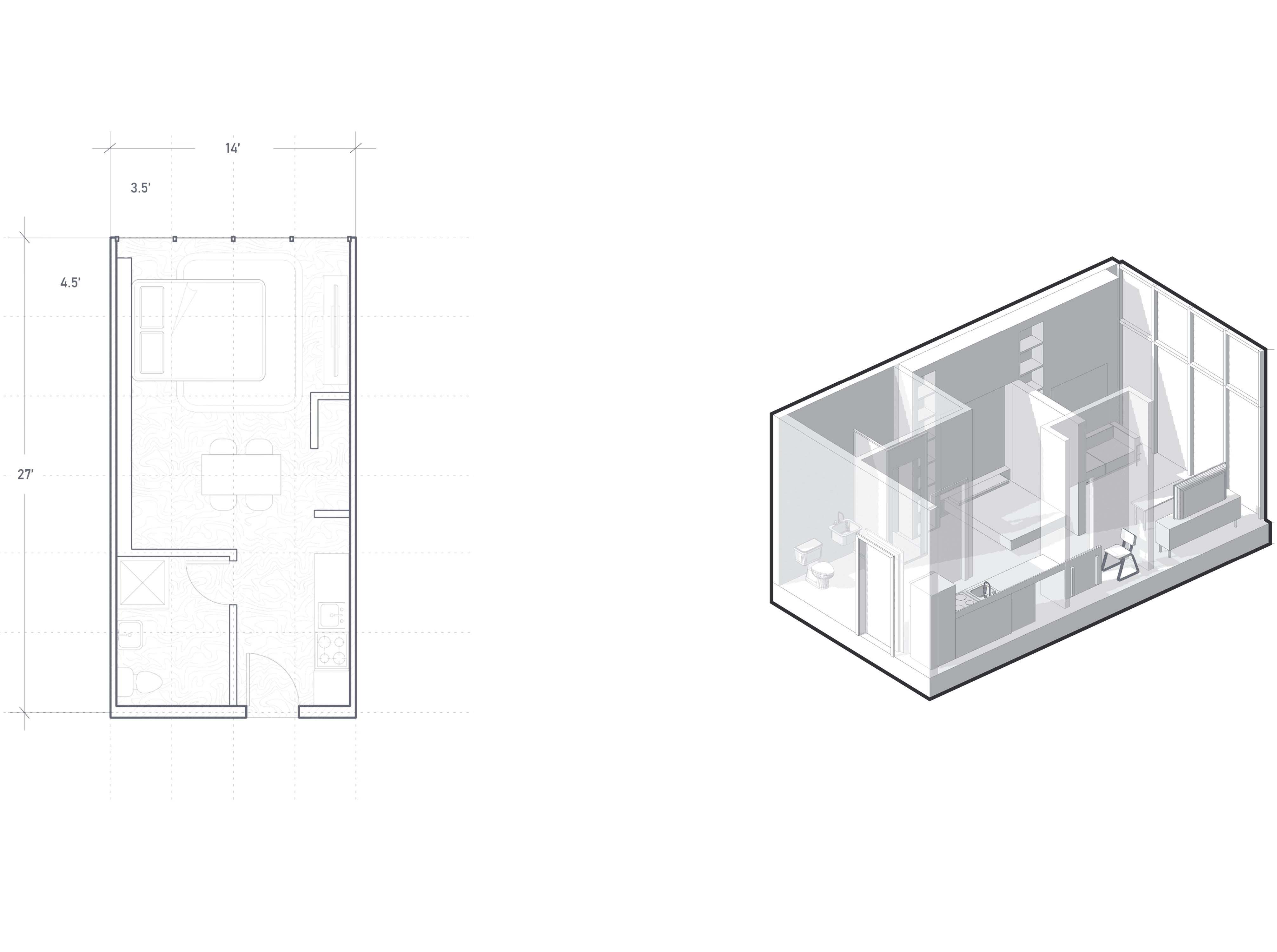
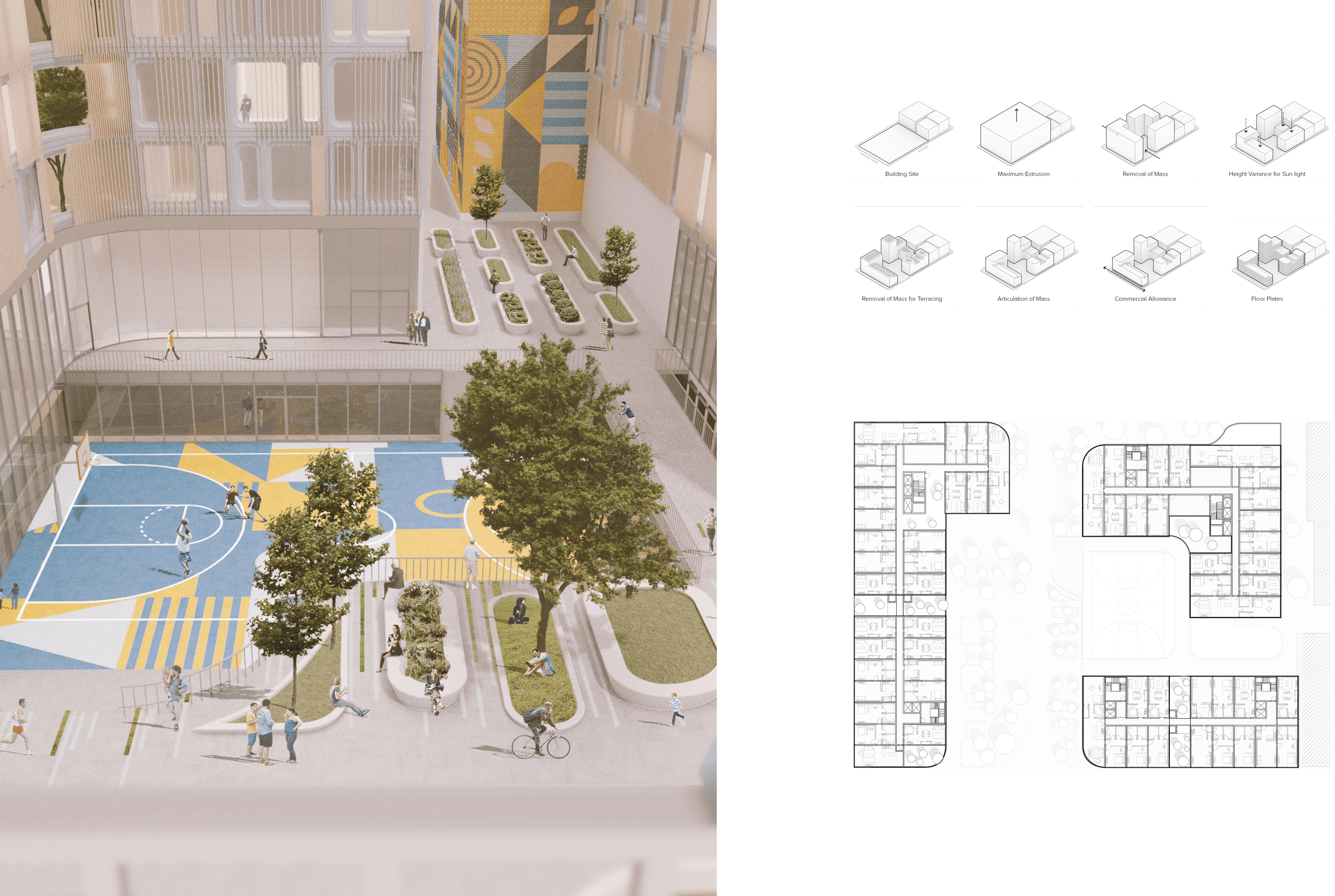
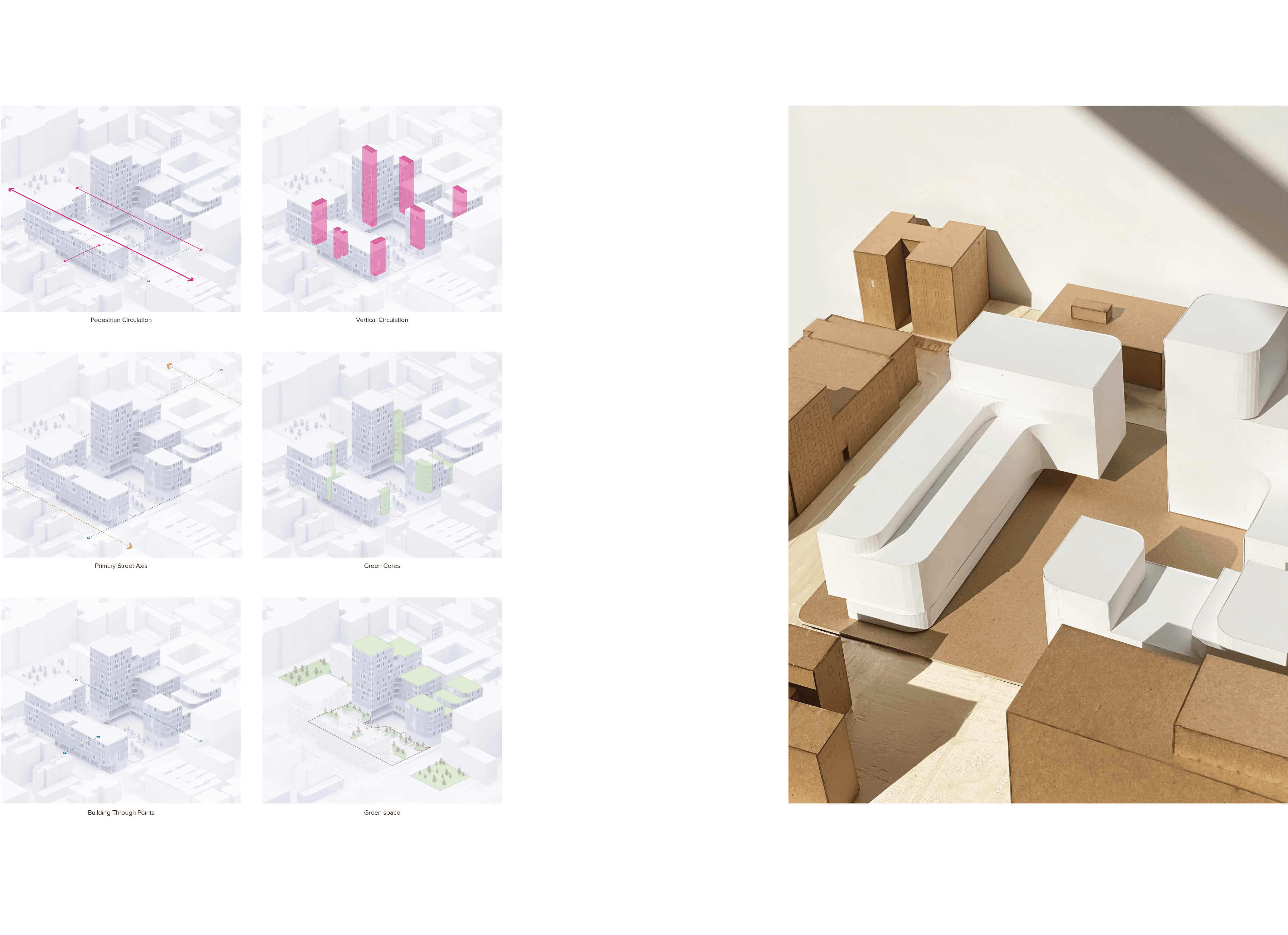
Centered on implementing flexible living solutions to a stagnant housing system, Modular Living aims to provide spaces that adapt to the cycles of life at various scales: day to day, month to month, and decade to decade. Challenge: How can we lower vacancy rates for project managers on the client side, and how can we reduce housing costs? Approach: After visiting the site and conducting user surveys in the neighborhood, we positioned the project to address the commercial thoroughfare on Courtlandt Avenue and the existing green spaces to the north and south. This created circulation flows and massing that optimized sunlight for public spaces while meeting existing zoning requirements for height and setbacks in the commercial section. The architecture itself was constrained by transportation requirements. Building from the smallest module at 14 feet wide and 27 feet long, units could be transported on two twin 27-foot trailers, making navigation through cities and beyond possible. Utilizing this system allowed us to view the site through a modular grid and evaluate which elements of the site worked with the module and which didn't. We addressed irregularities through shared spaces and bespoke conditions that connected the building to the ground. Outcome: We created a series of spaces and modules that solved user needs, providing homes that could grow and evolve with families. This kept vacancy rates lower by retaining valued residents who might otherwise leave due to space constraints. Creating units that could be reprogrammed through partitions and on-site adjustments meant spaces could expand as families grew. While tackling both challenges, we reduced unit costs and incorporated site-specific contexts to create valuable public spaces throughout the building. We also developed a kit of facade parts that could be modified to create varied building gestures and break up the monotony of glass high-rises. Ultimately, we designed an architecturally significant form of housing that addressed the needs of the community in the Bronx and beyond.
Centered on implementing flexible living solutions to a stagnant housing system, Modular Living aims to provide spaces that adapt to the cycles of life at various scales: day to day, month to month, and decade to decade. Challenge: How can we lower vacancy rates for project managers on the client side, and how can we reduce housing costs? Approach: After visiting the site and conducting user surveys in the neighborhood, we positioned the project to address the commercial thoroughfare on Courtlandt Avenue and the existing green spaces to the north and south. This created circulation flows and massing that optimized sunlight for public spaces while meeting existing zoning requirements for height and setbacks in the commercial section. The architecture itself was constrained by transportation requirements. Building from the smallest module at 14 feet wide and 27 feet long, units could be transported on two twin 27-foot trailers, making navigation through cities and beyond possible. Utilizing this system allowed us to view the site through a modular grid and evaluate which elements of the site worked with the module and which didn't. We addressed irregularities through shared spaces and bespoke conditions that connected the building to the ground. Outcome: We created a series of spaces and modules that solved user needs, providing homes that could grow and evolve with families. This kept vacancy rates lower by retaining valued residents who might otherwise leave due to space constraints. Creating units that could be reprogrammed through partitions and on-site adjustments meant spaces could expand as families grew. While tackling both challenges, we reduced unit costs and incorporated site-specific contexts to create valuable public spaces throughout the building. We also developed a kit of facade parts that could be modified to create varied building gestures and break up the monotony of glass high-rises. Ultimately, we designed an architecturally significant form of housing that addressed the needs of the community in the Bronx and beyond.
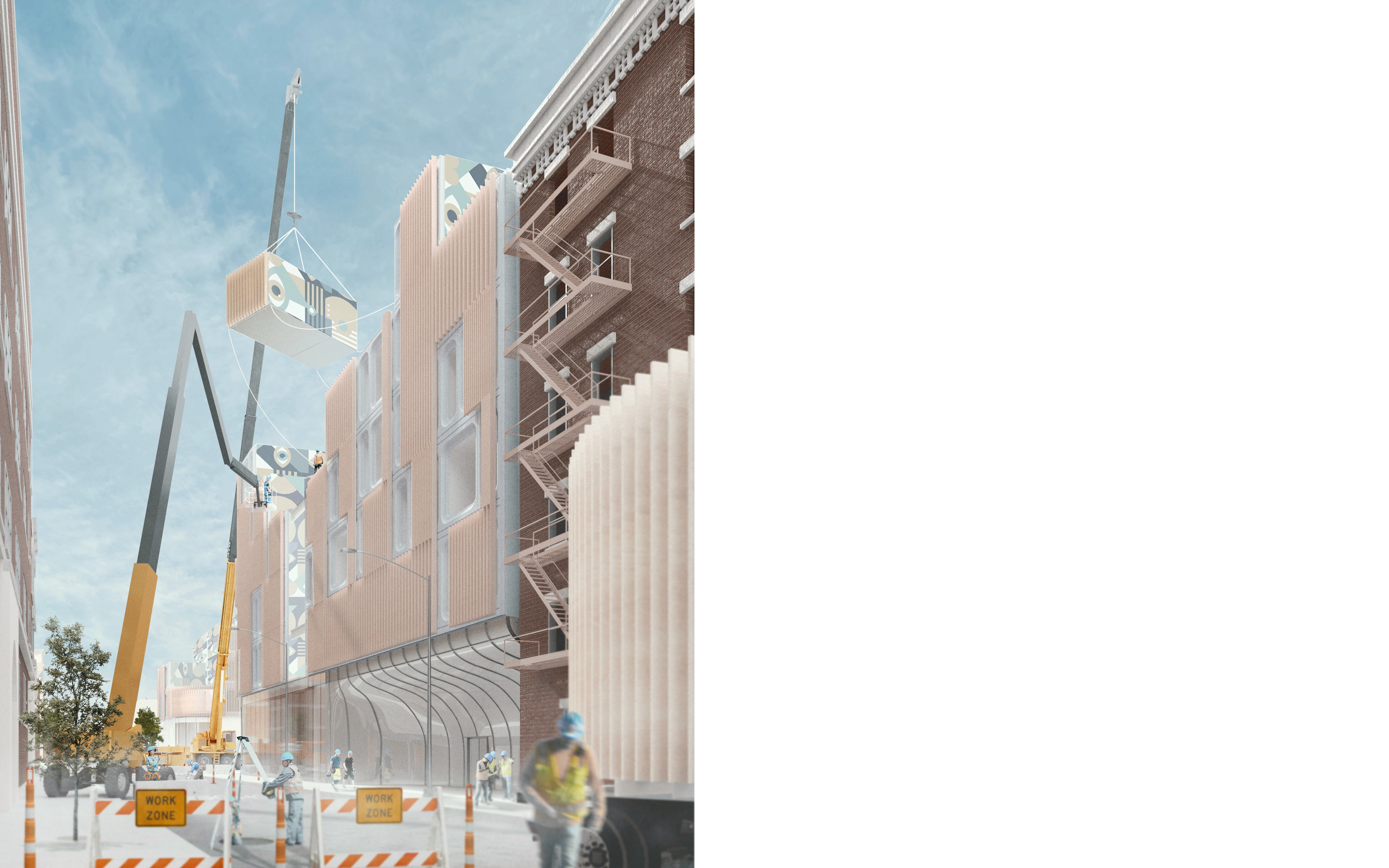
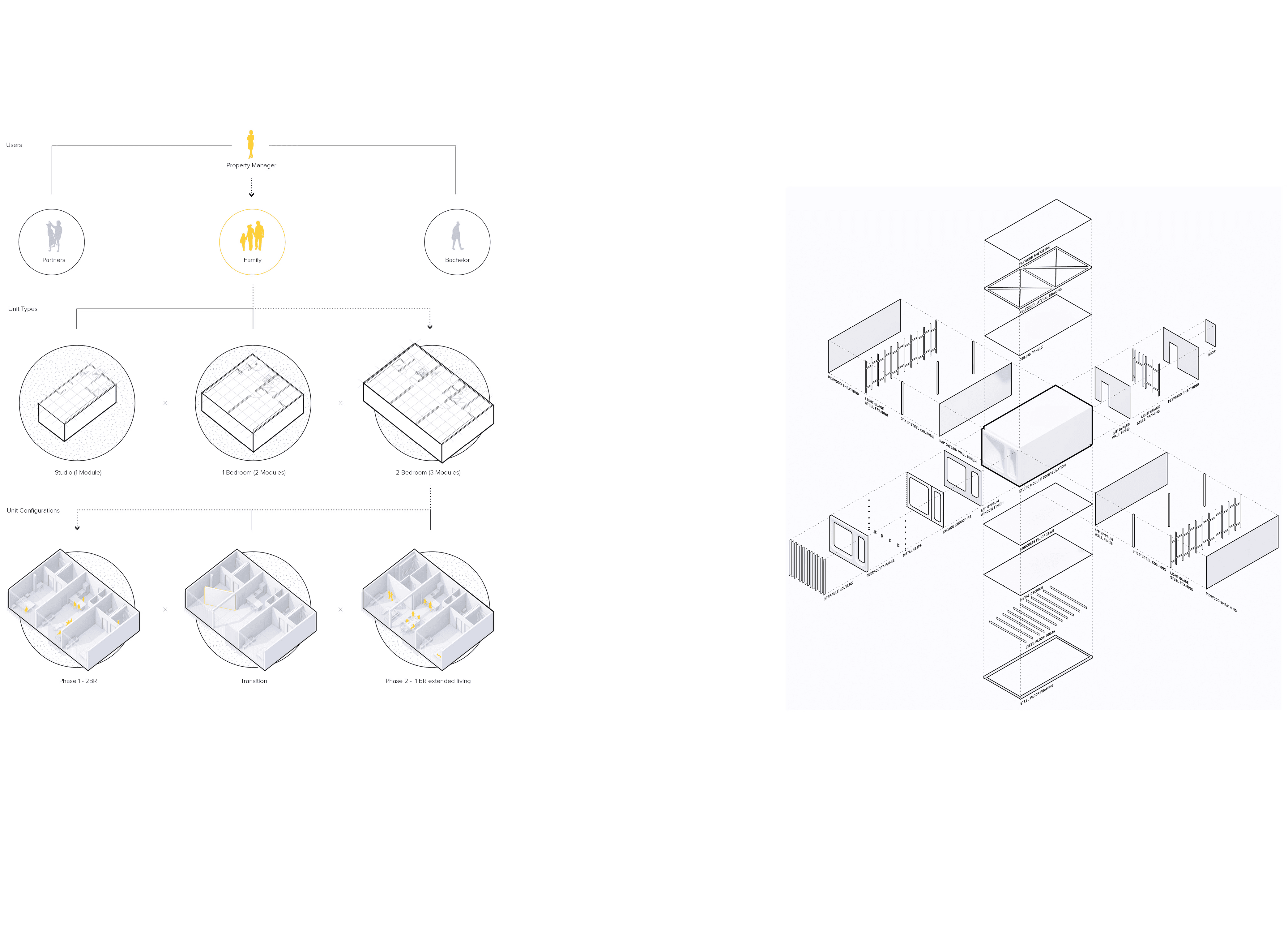
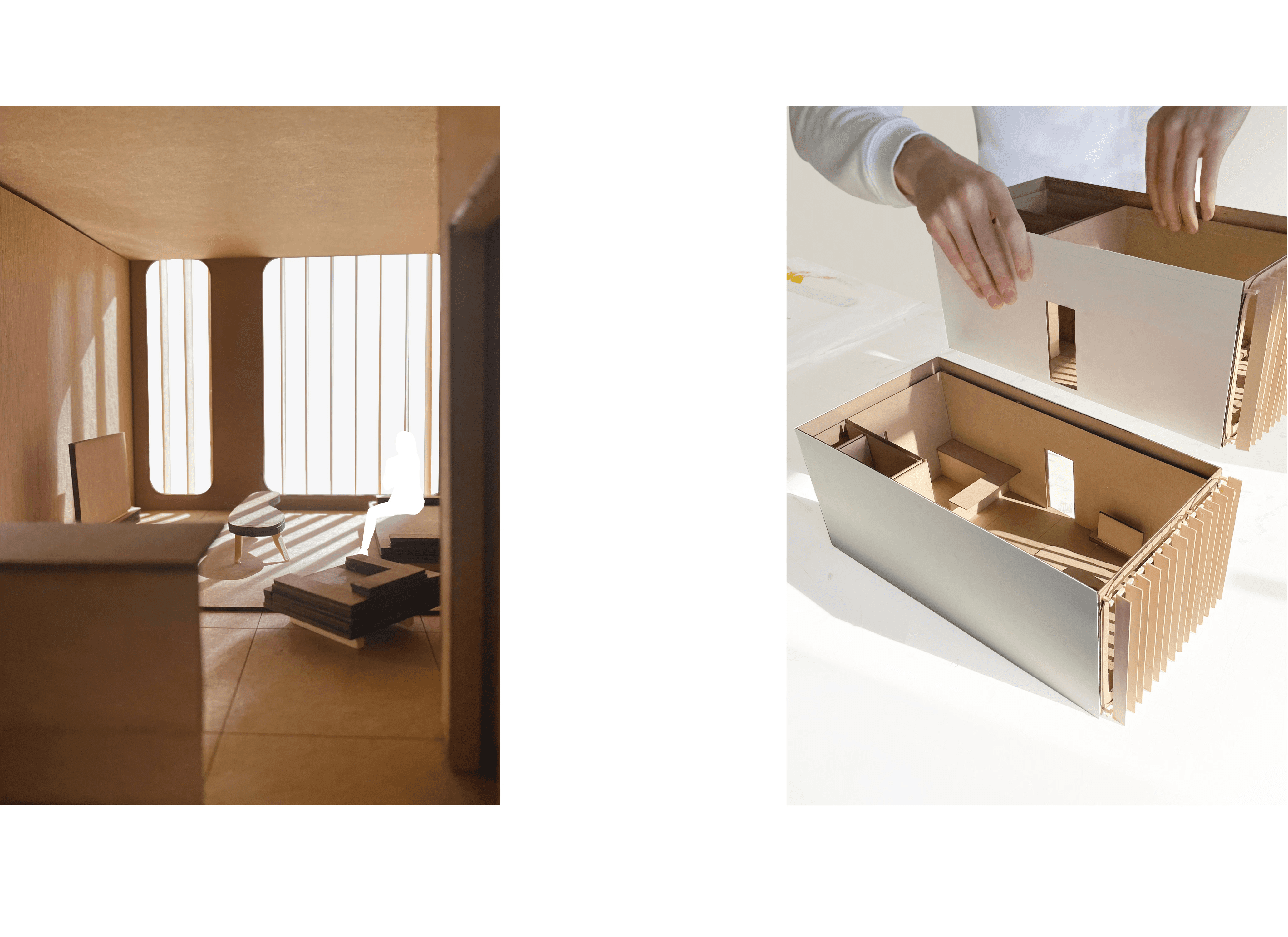
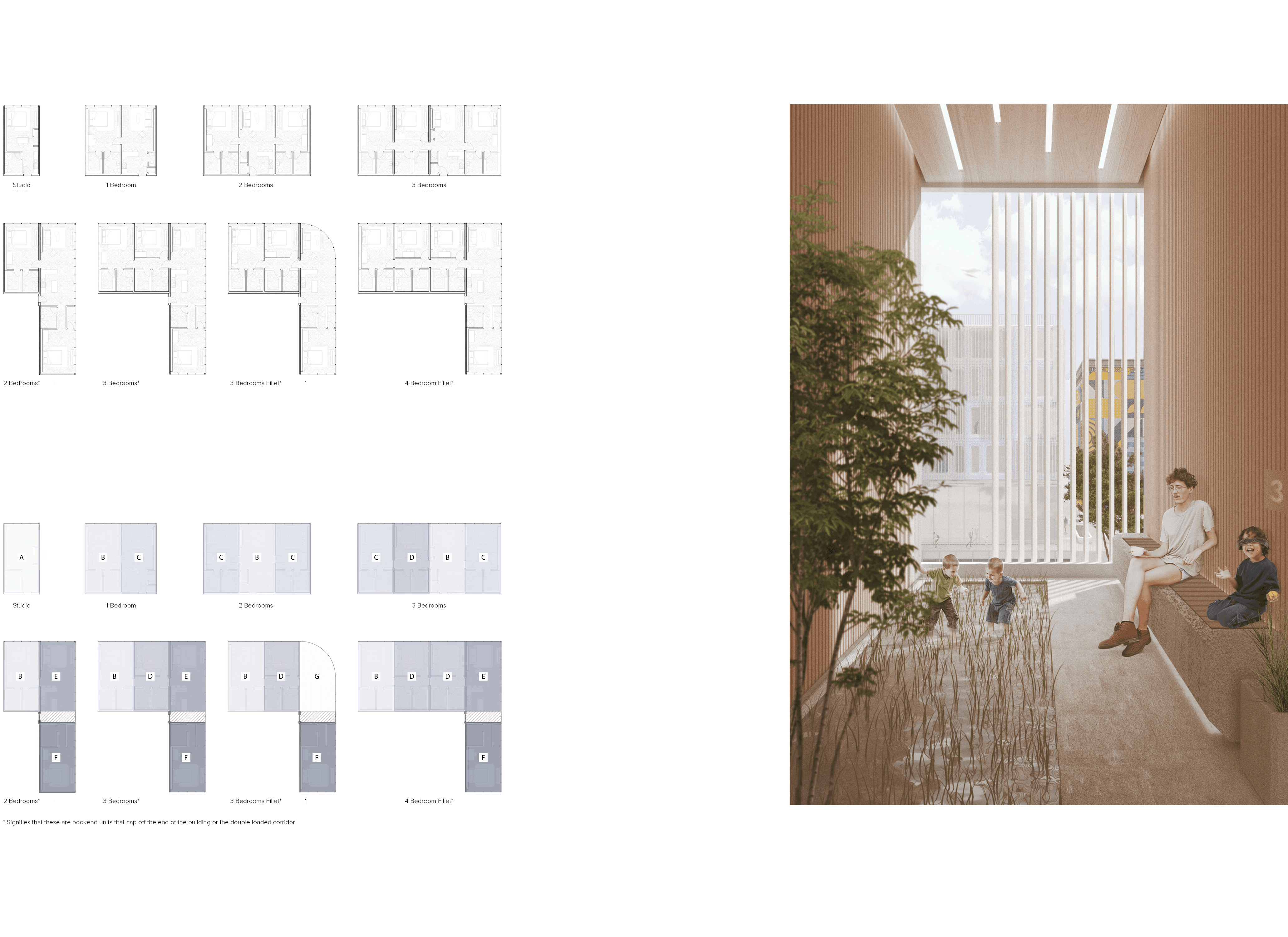
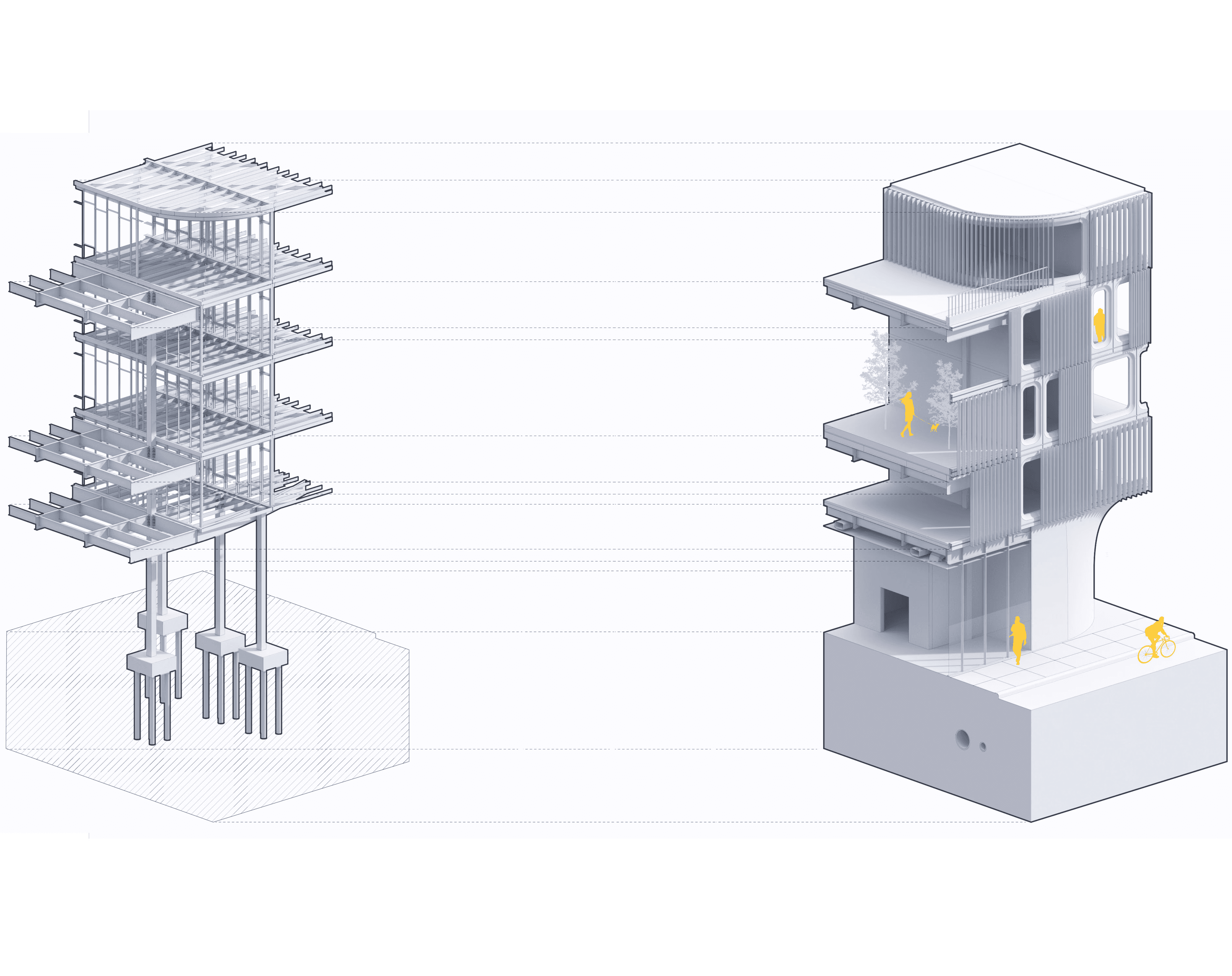
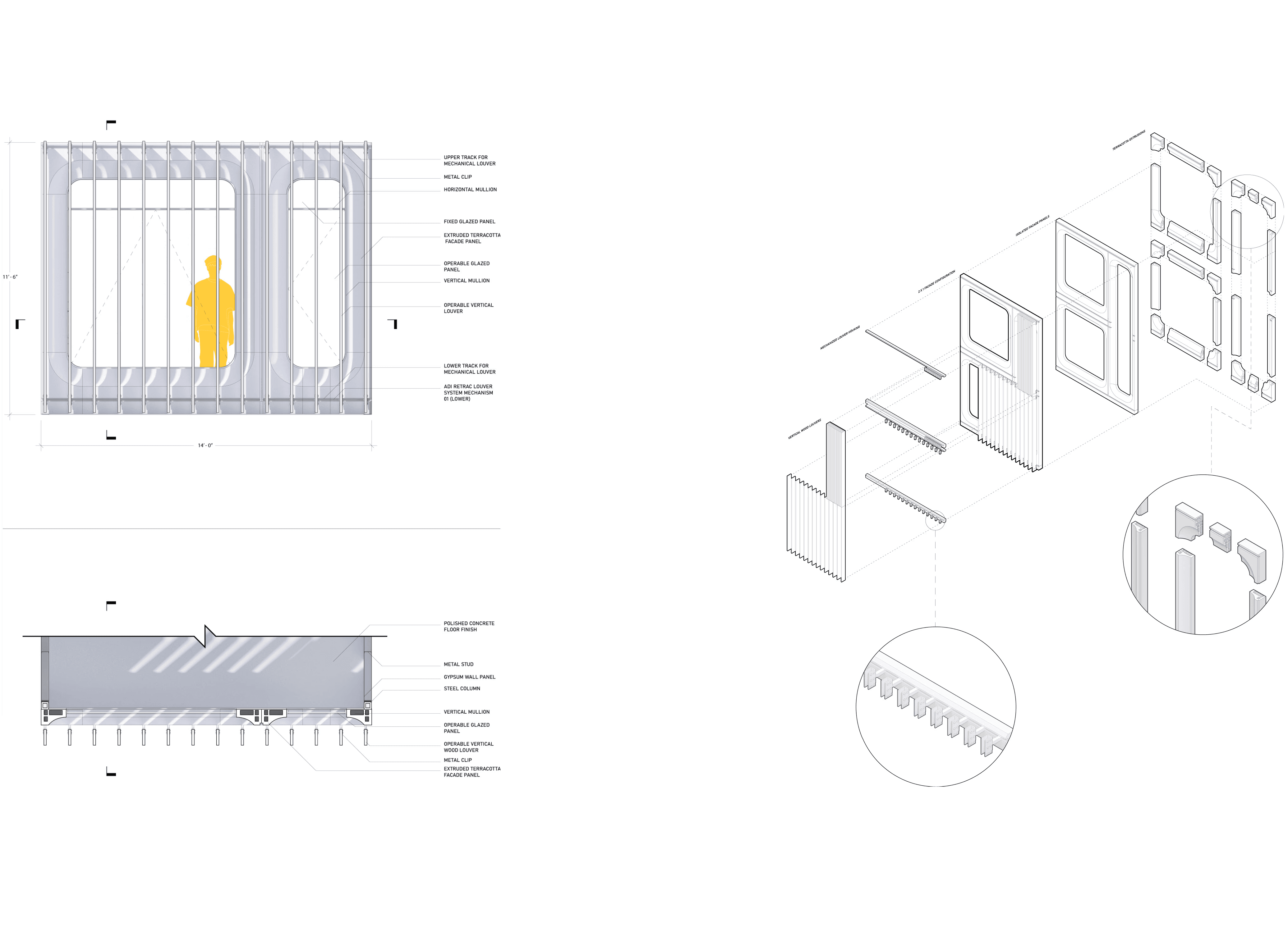
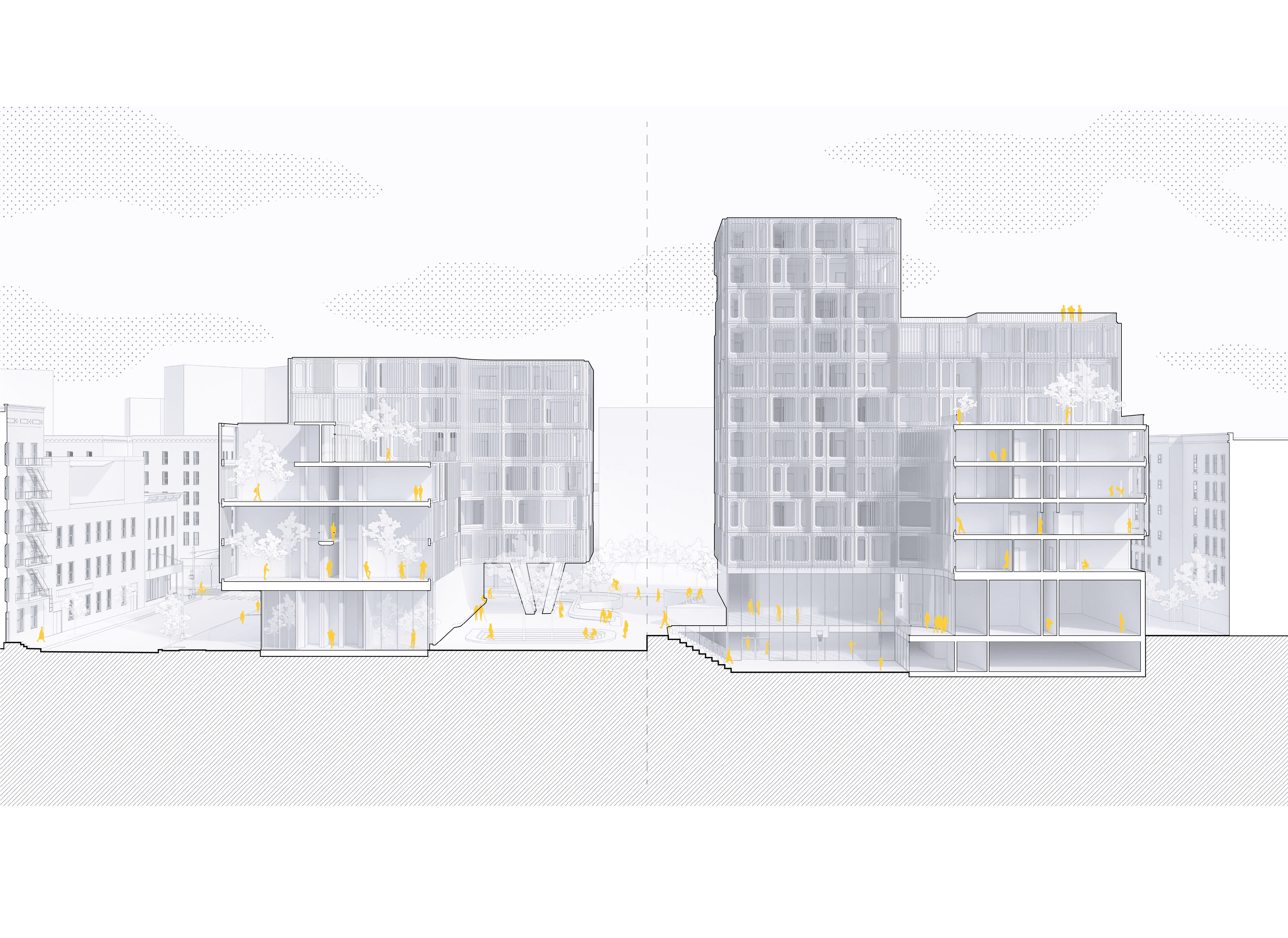
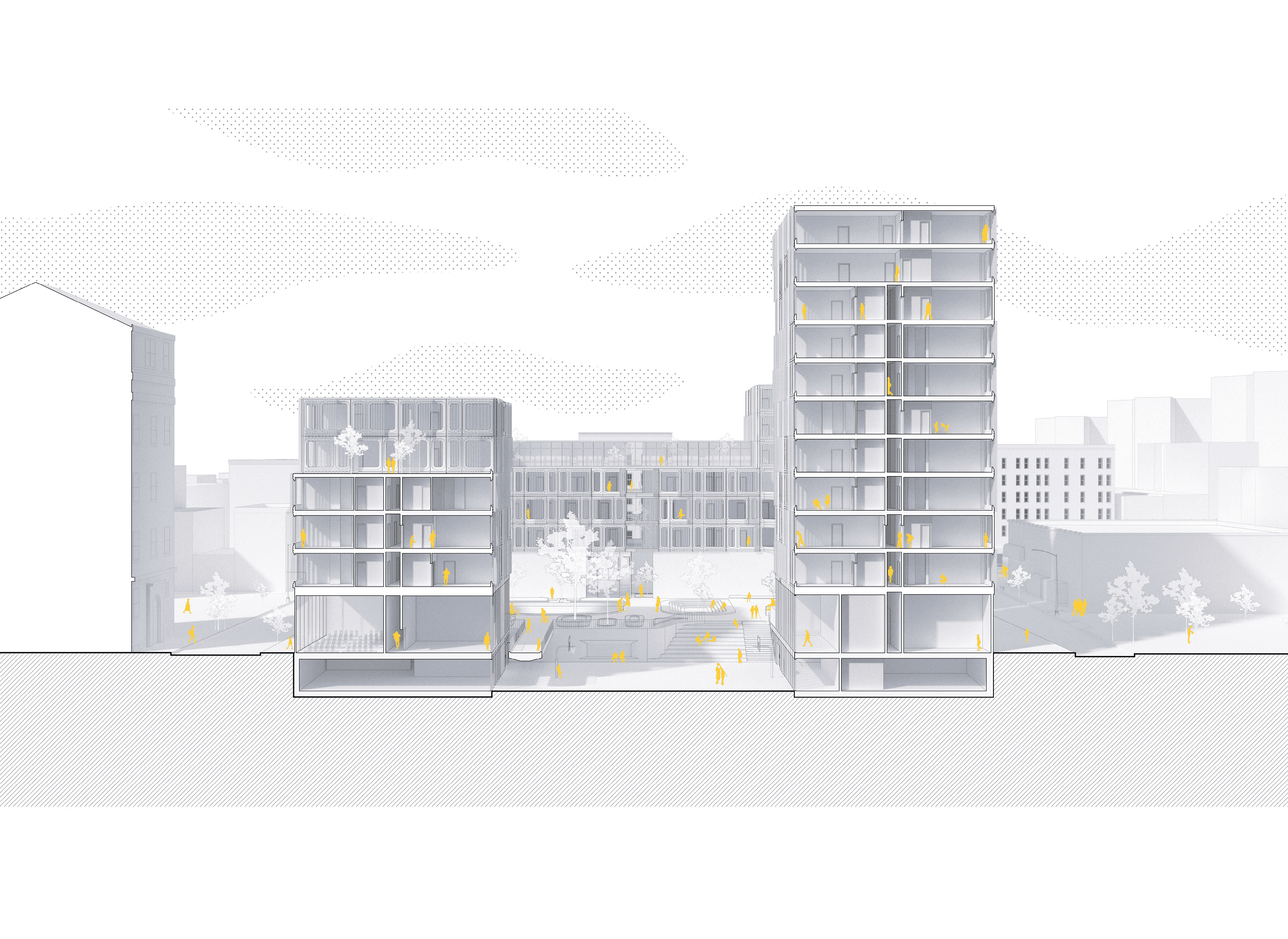
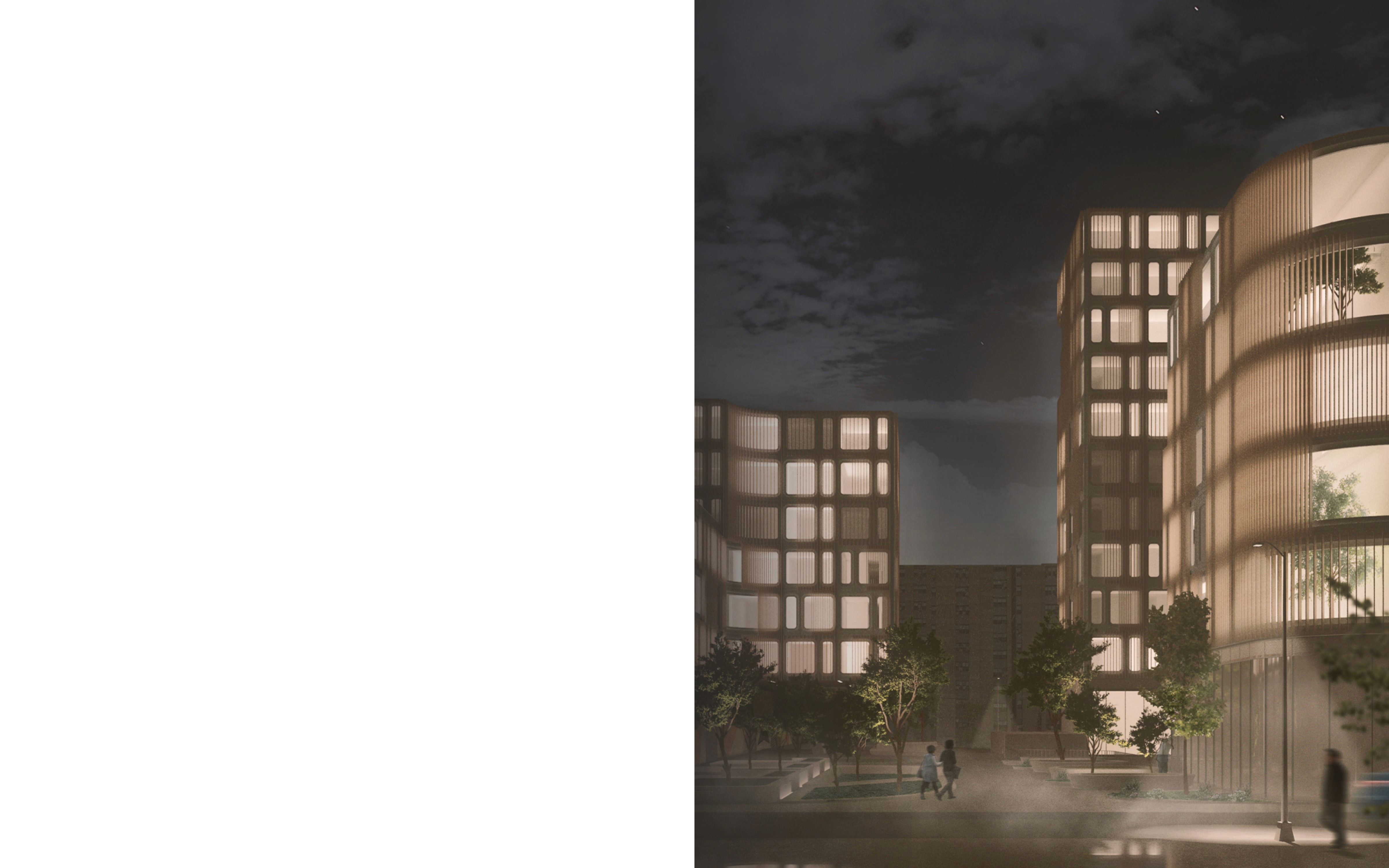
Centered on the concept of implementing flexible living solutions to a stagnant and rigid housing system, Modular Living aims to provide a space that can adapt to the changes and flows of the cycles of life at various scales—from day to day, month to month, and decade to decade. In an effort to undercut the traditional manufacturing costs of housing and reduce vacancy rates, this flexible modular system can adapt to the everyday desires of our occupants while maintaining low levels of variance within prefabricated elements and reducing redundancy when combined with site-specific architectural moments.
Client NYCHA Year 2021 Services Architecture Credits Brennan Heyward Samuel Bager Michael Caton (Critic)