
33 Thomas
Columbia
Columbia
Client
Client
Campaign, Digital
Campaign, Digital
Services
Services
2020
2020
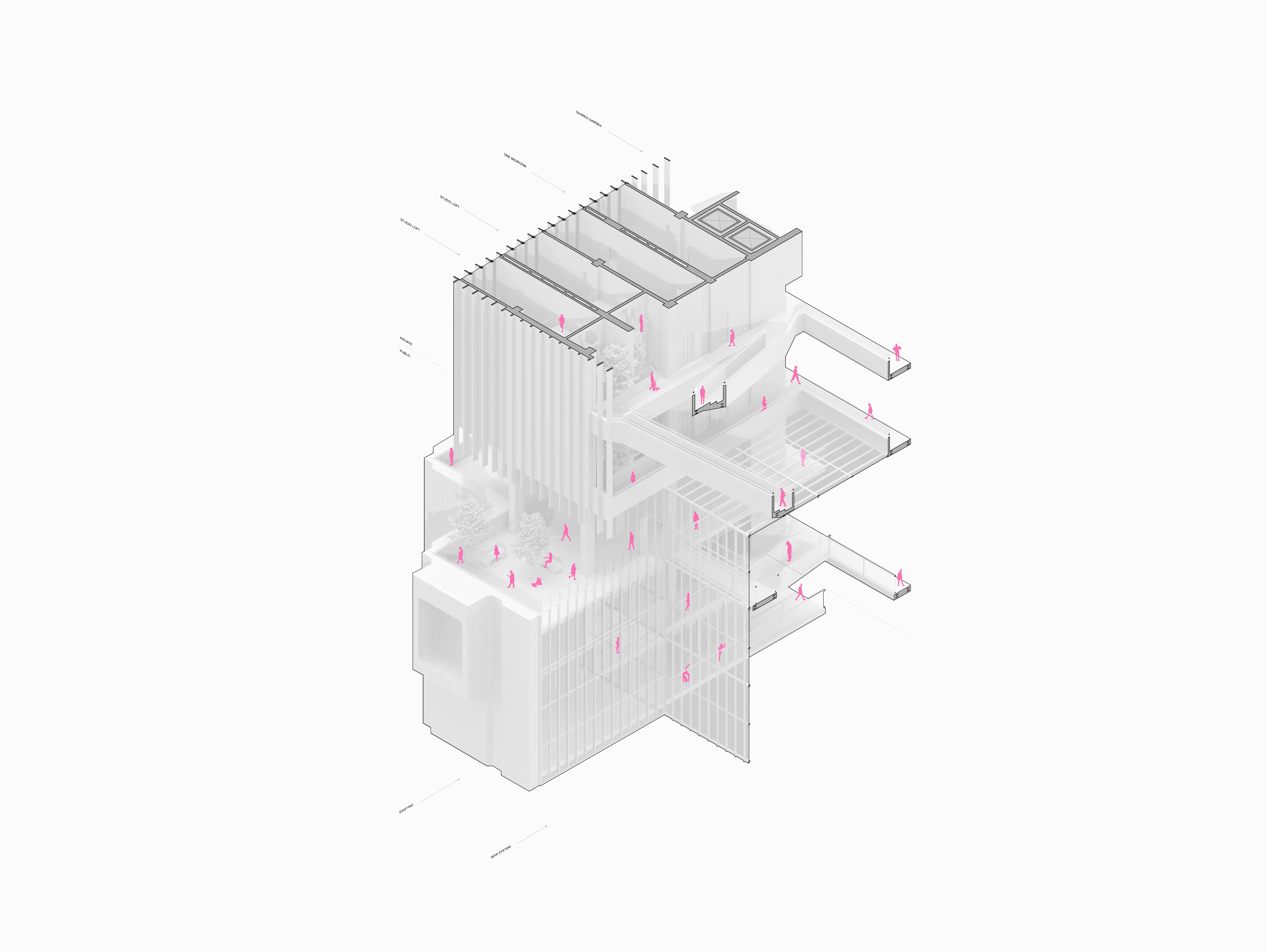
33 Thomas, formerly known as the AT&T Long Lines Building, holds a prominent place in the history of New York City high-rises. Its architectural legacy is complex: monolithic, iconic, and extremely functional, yet equally scrutinized. The rumors surrounding this architecture are as impressive as the building itself. An atomic bomb-proof, windowless high-rise with incredibly low occupancy and minimal use in the twenty-first century. What can we do with it? Challenge: How do you adapt an iconic brutalist monument designed for complete isolation into a livable, mixed-use building? Can you preserve the monumental character while introducing the natural light and openness that housing requires? How can this site provide much-needed affordable housing and public programs without compromising the building's architectural significance? Approach: I focused on preserving the monumental facade and brutalist character by leaving the base and podium largely intact while opening up the tower where residential units had a greater need for natural light. The intervention included affordable housing above and mixed-use programming below: athletic courts, classrooms, a library, and more. By slicing through two central structural bays, I opened the building to the east and west, creating a new circulation axis that connected the main thoroughfare to the public plaza on the opposite side. This radical cut provided excellent unit depth and brought natural light into the shared programs. The central void enabled a monumental stair that performs triple duty: as diagonal bracing that stiffens the building, as circulation that creates dynamic flow, and as ornament. This staircase became the linchpin of structure and circulation, strengthening the connection between spaces and neighborhoods. Outcome: The intervention transformed 33 Thomas from an isolated monument into a mixed-use building providing affordable housing and public programs while preserving its iconic brutalist character. The sliced structural bays created dramatic double-height circulation spaces that connected the building to its urban context for the first time. The monumental stair, functioning as both diagonal bracing and ornament, became a public experience that drew people through the building while strengthening connections between neighborhoods. Above, the residential units leveraged the existing grid to provide rational layouts with private outdoor spaces, bringing natural light and livability to a building originally designed to exclude both.
33 Thomas, formerly known as the AT&T Long Lines Building, holds a prominent place in the history of New York City high-rises. Its architectural legacy is complex: monolithic, iconic, and extremely functional, yet equally scrutinized. The rumors surrounding this architecture are as impressive as the building itself. An atomic bomb-proof, windowless high-rise with incredibly low occupancy and minimal use in the twenty-first century. What can we do with it? Challenge: How do you adapt an iconic brutalist monument designed for complete isolation into a livable, mixed-use building? Can you preserve the monumental character while introducing the natural light and openness that housing requires? How can this site provide much-needed affordable housing and public programs without compromising the building's architectural significance? Approach: I focused on preserving the monumental facade and brutalist character by leaving the base and podium largely intact while opening up the tower where residential units had a greater need for natural light. The intervention included affordable housing above and mixed-use programming below: athletic courts, classrooms, a library, and more. By slicing through two central structural bays, I opened the building to the east and west, creating a new circulation axis that connected the main thoroughfare to the public plaza on the opposite side. This radical cut provided excellent unit depth and brought natural light into the shared programs. The central void enabled a monumental stair that performs triple duty: as diagonal bracing that stiffens the building, as circulation that creates dynamic flow, and as ornament. This staircase became the linchpin of structure and circulation, strengthening the connection between spaces and neighborhoods. Outcome: The intervention transformed 33 Thomas from an isolated monument into a mixed-use building providing affordable housing and public programs while preserving its iconic brutalist character. The sliced structural bays created dramatic double-height circulation spaces that connected the building to its urban context for the first time. The monumental stair, functioning as both diagonal bracing and ornament, became a public experience that drew people through the building while strengthening connections between neighborhoods. Above, the residential units leveraged the existing grid to provide rational layouts with private outdoor spaces, bringing natural light and livability to a building originally designed to exclude both.
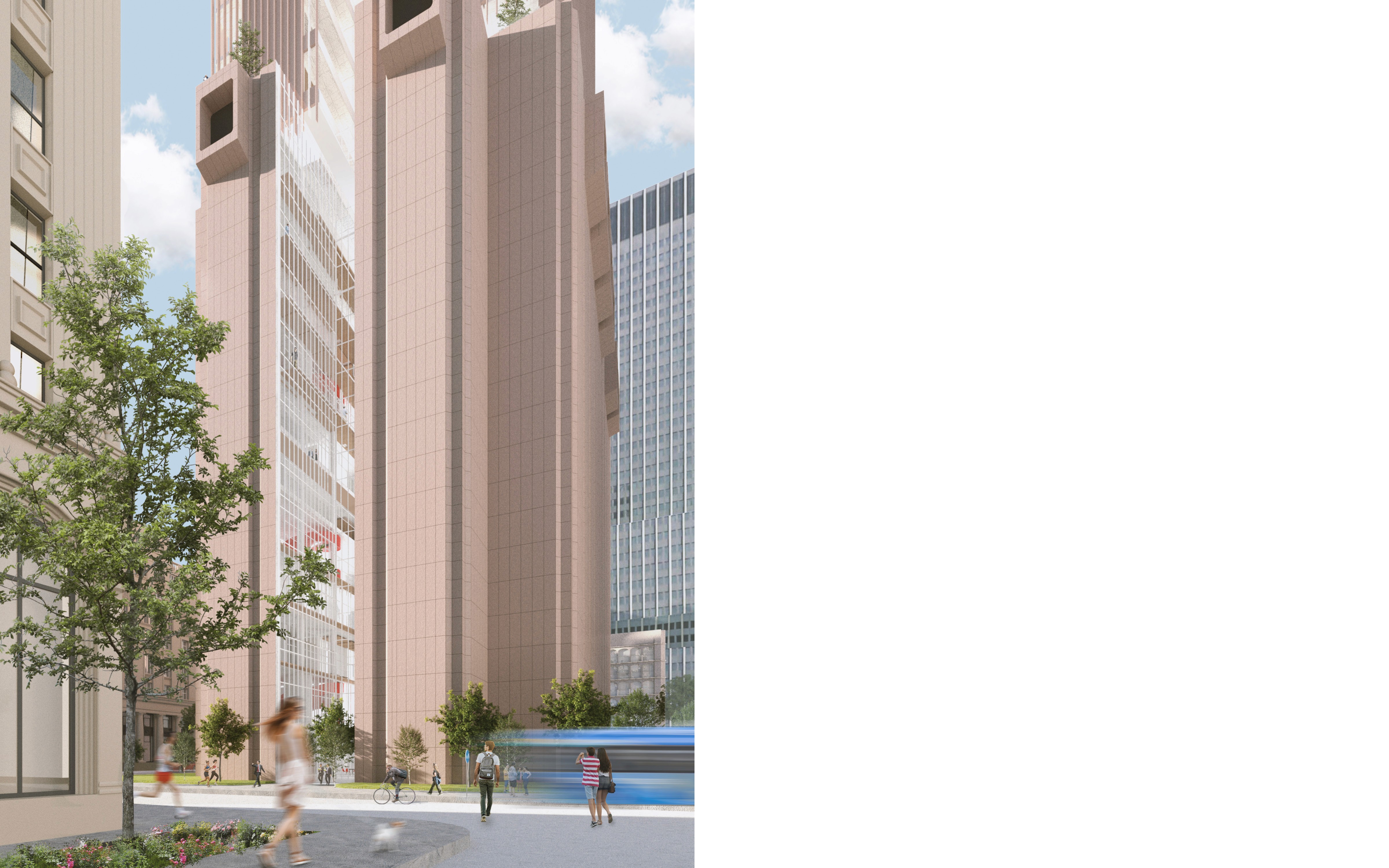
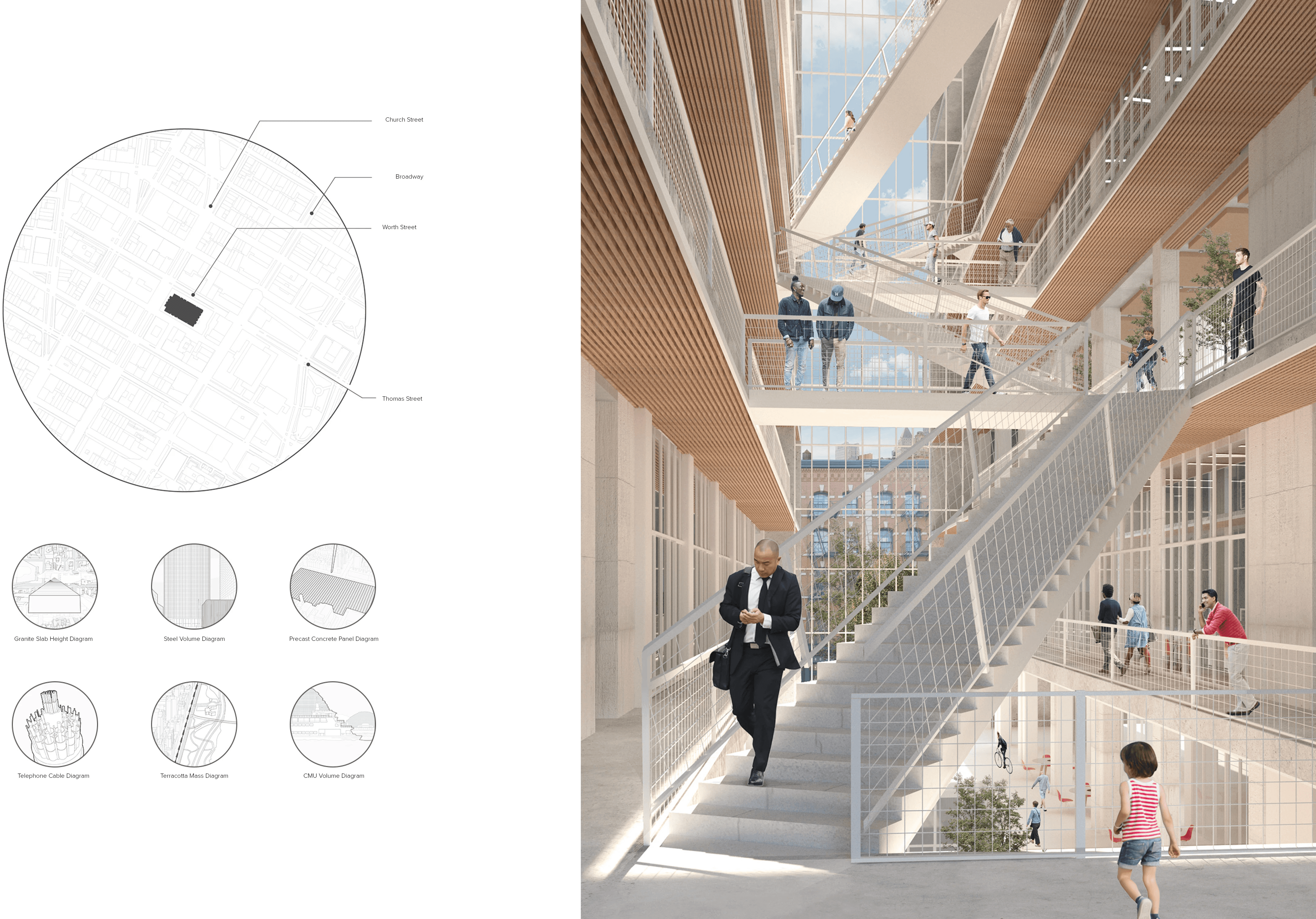
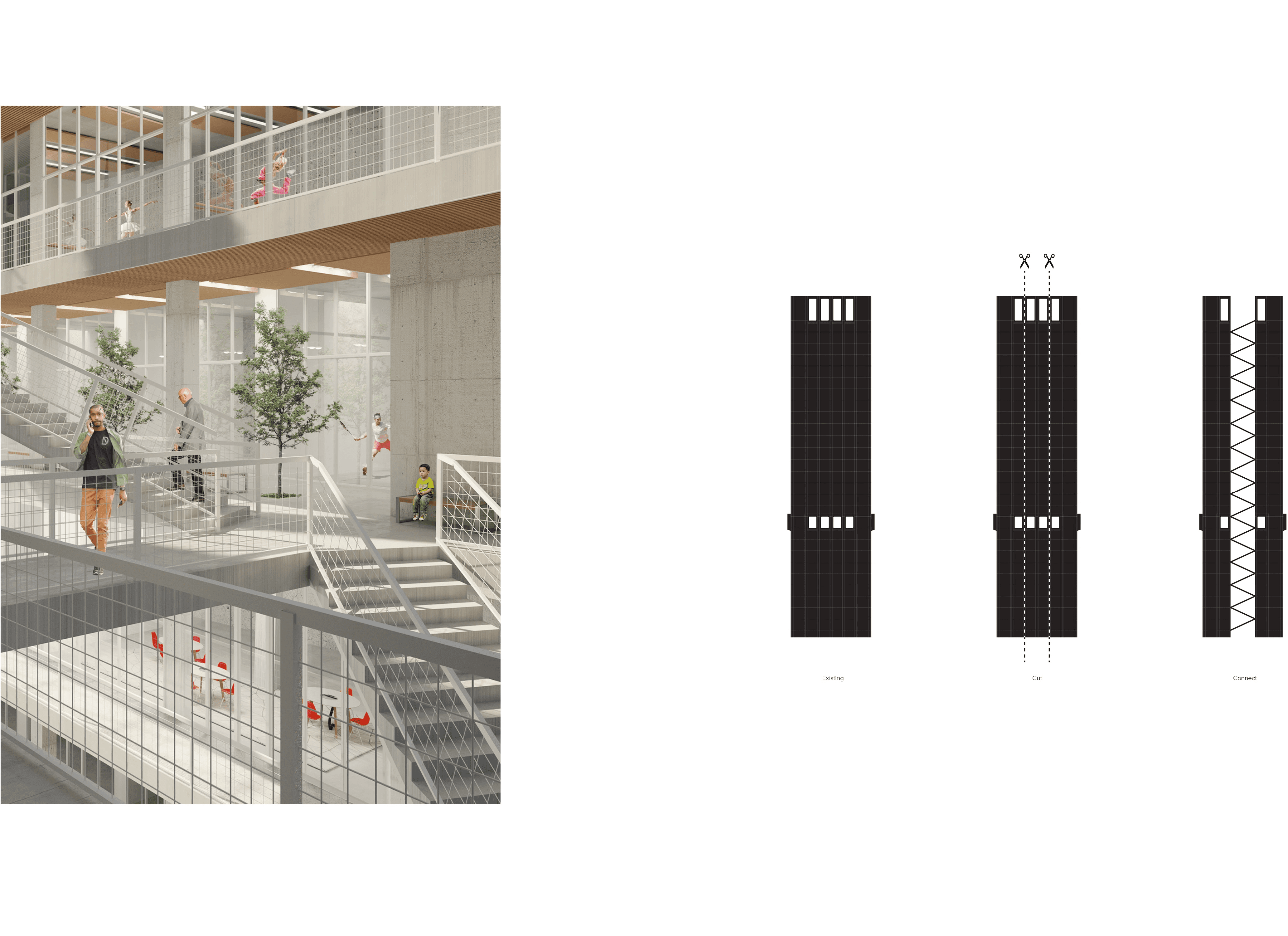
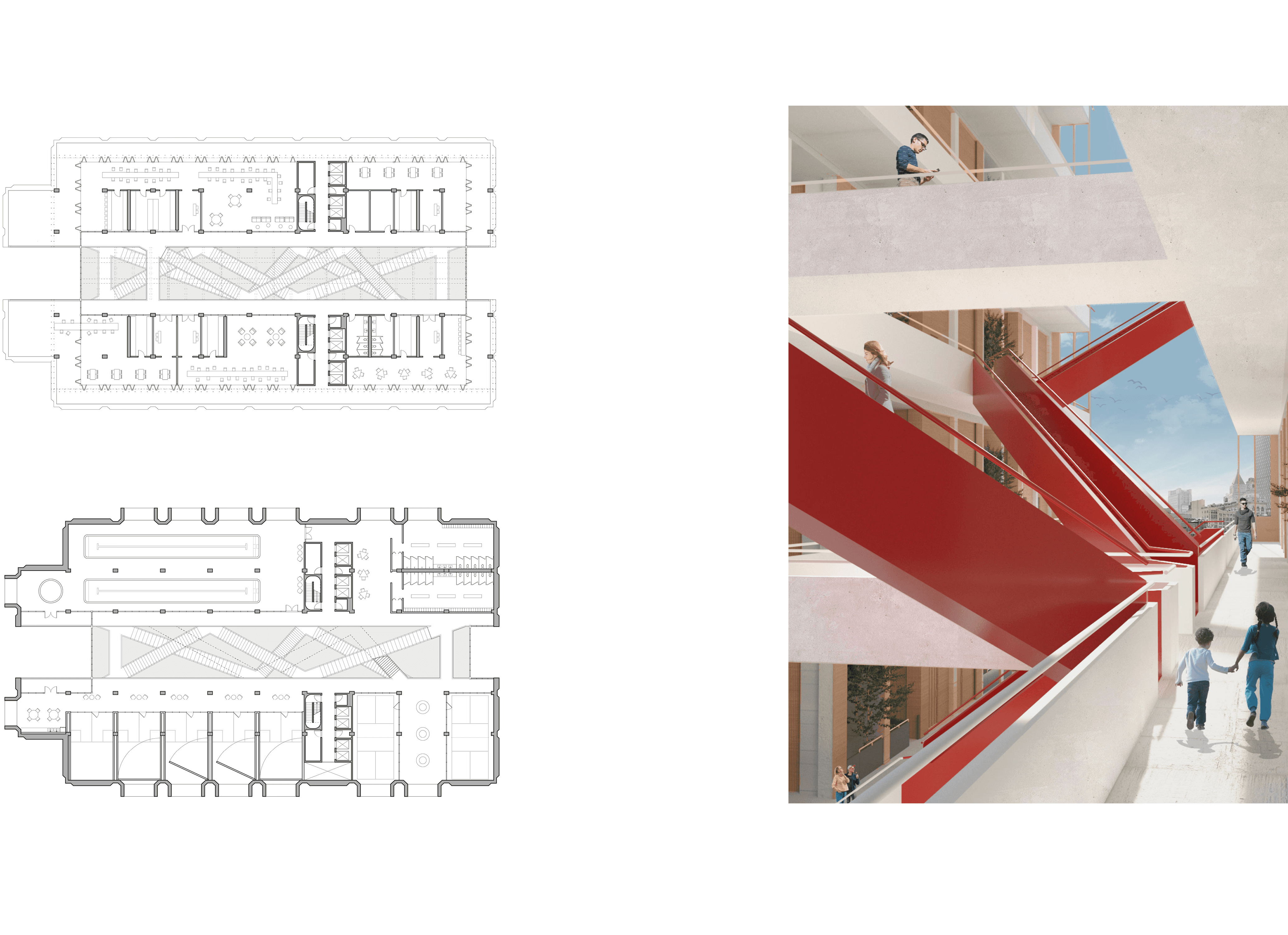
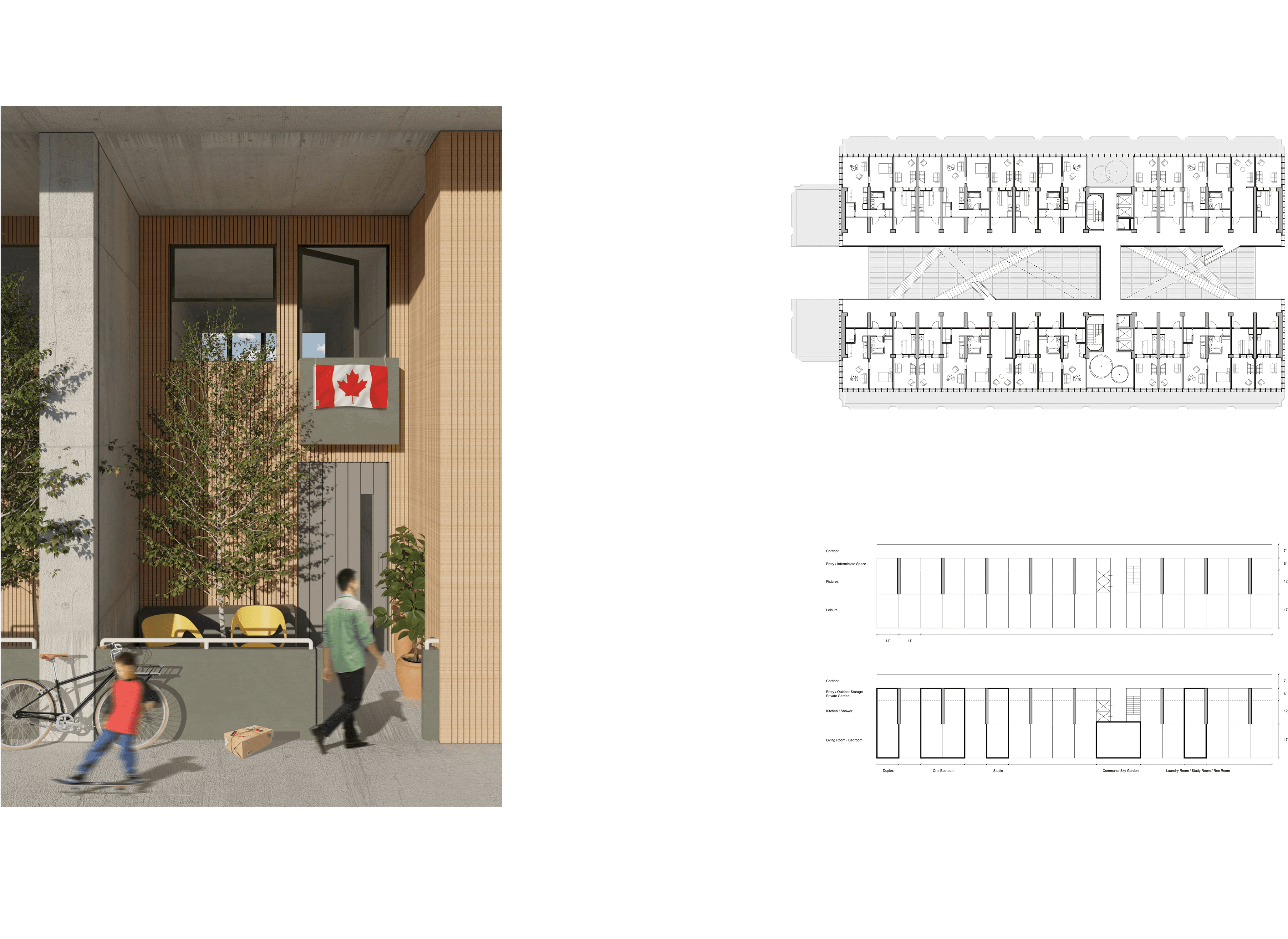
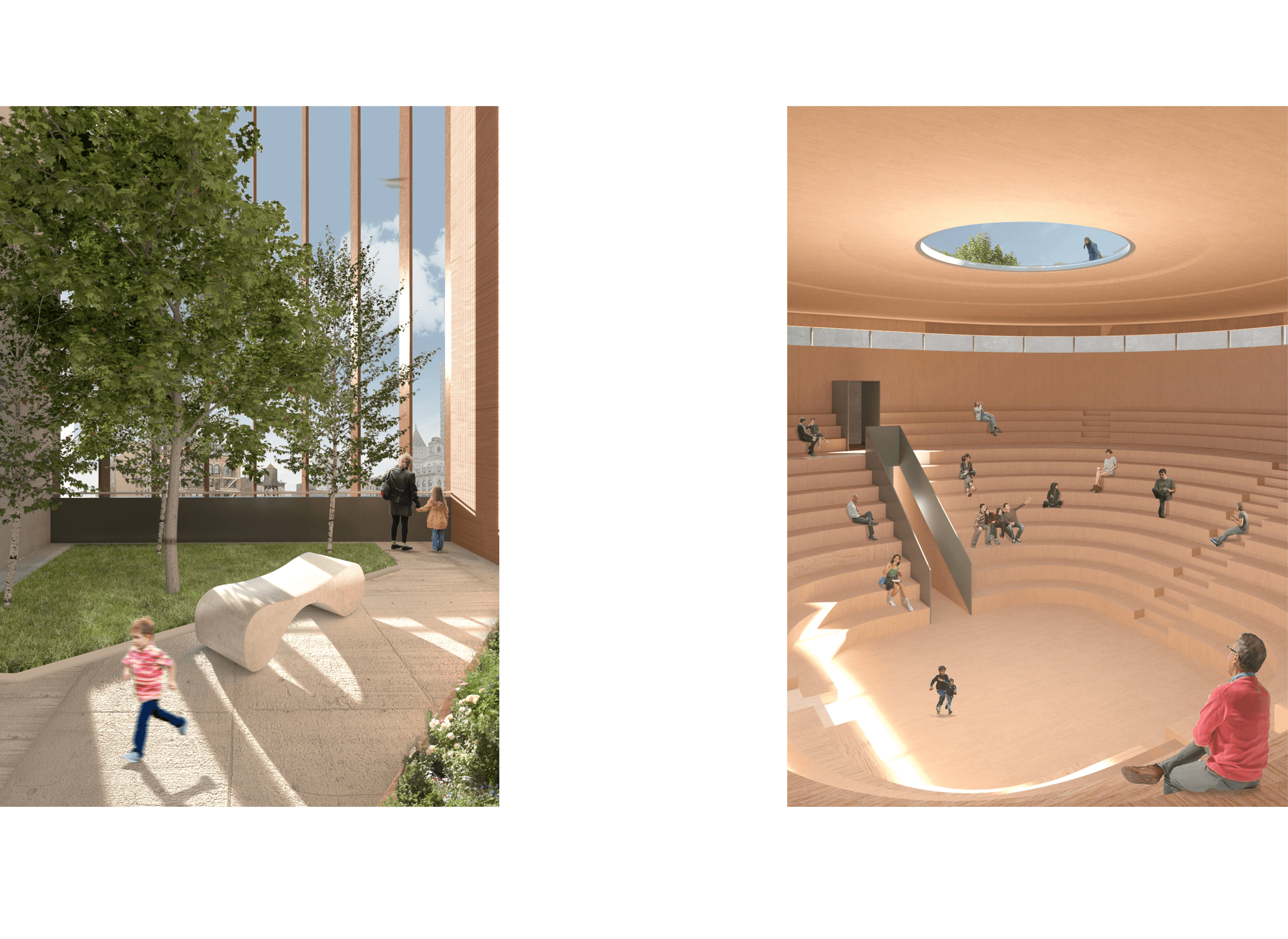
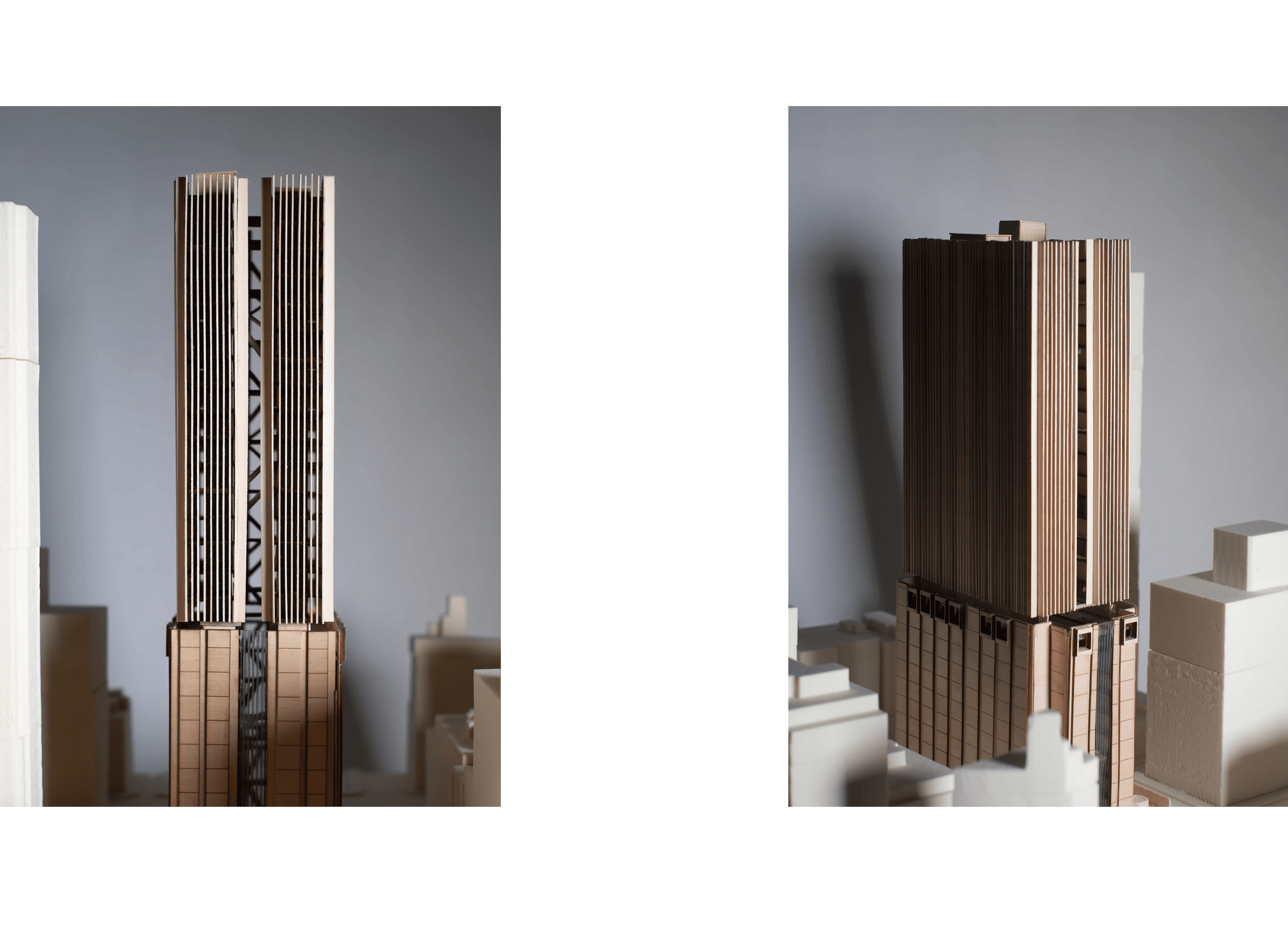
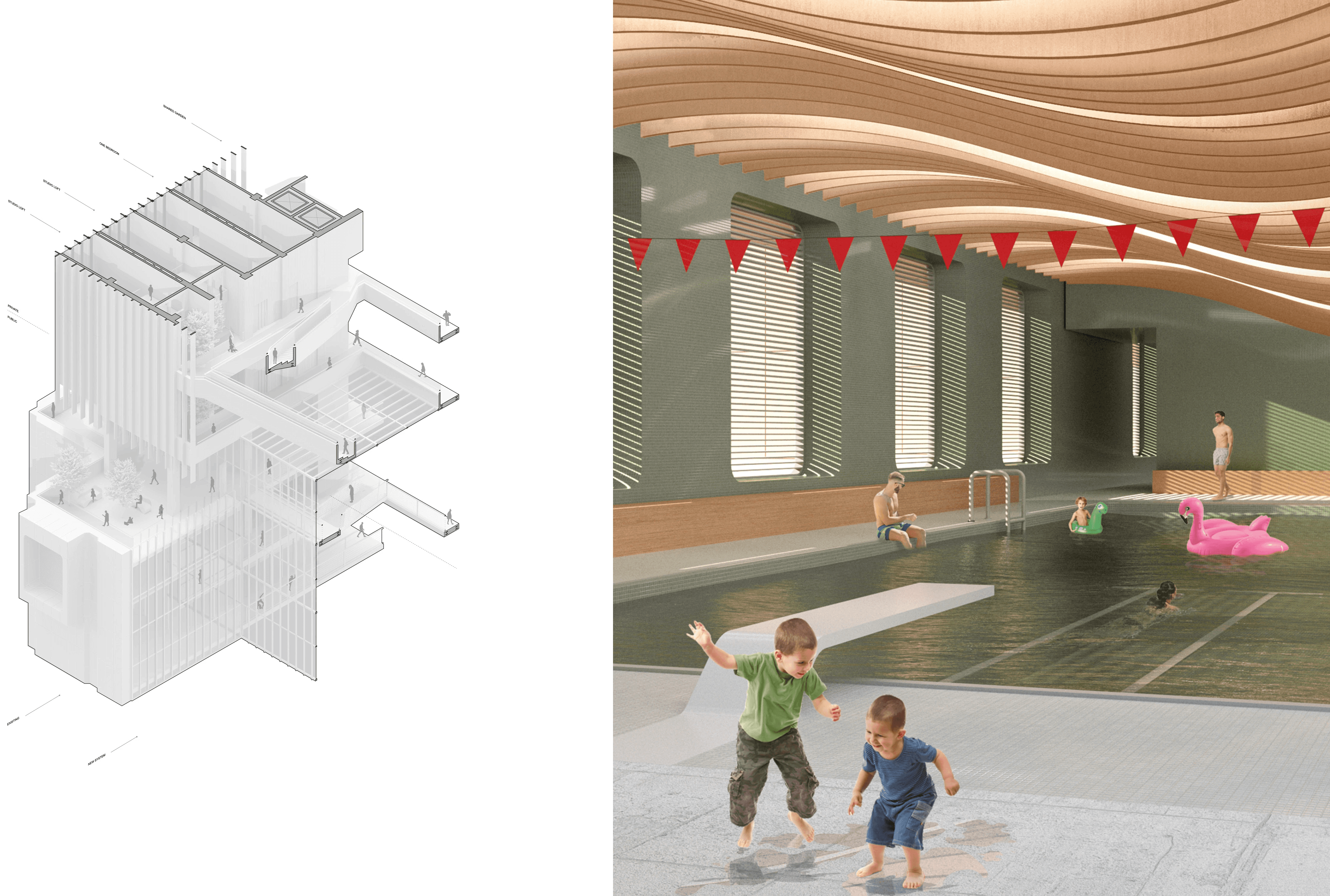
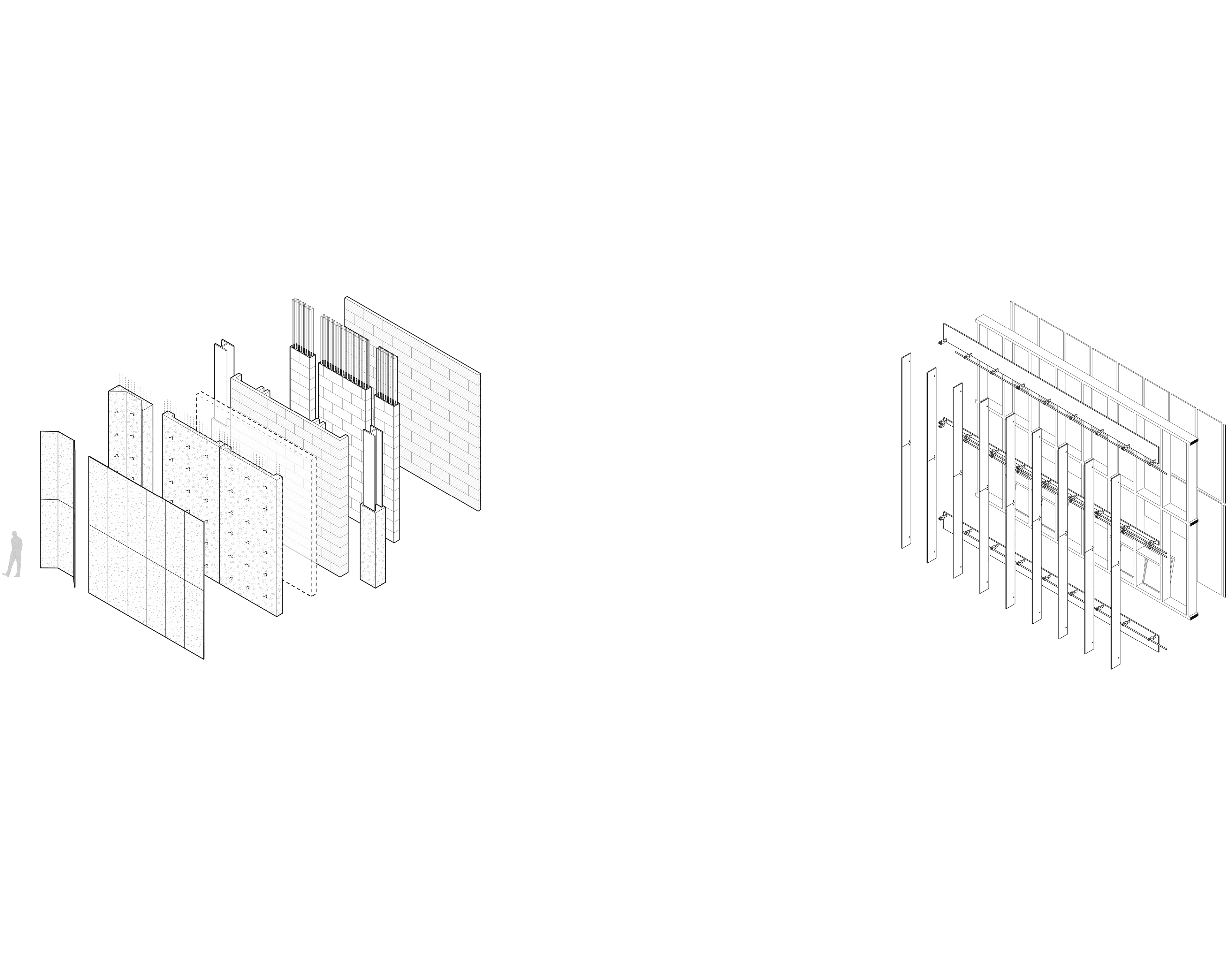
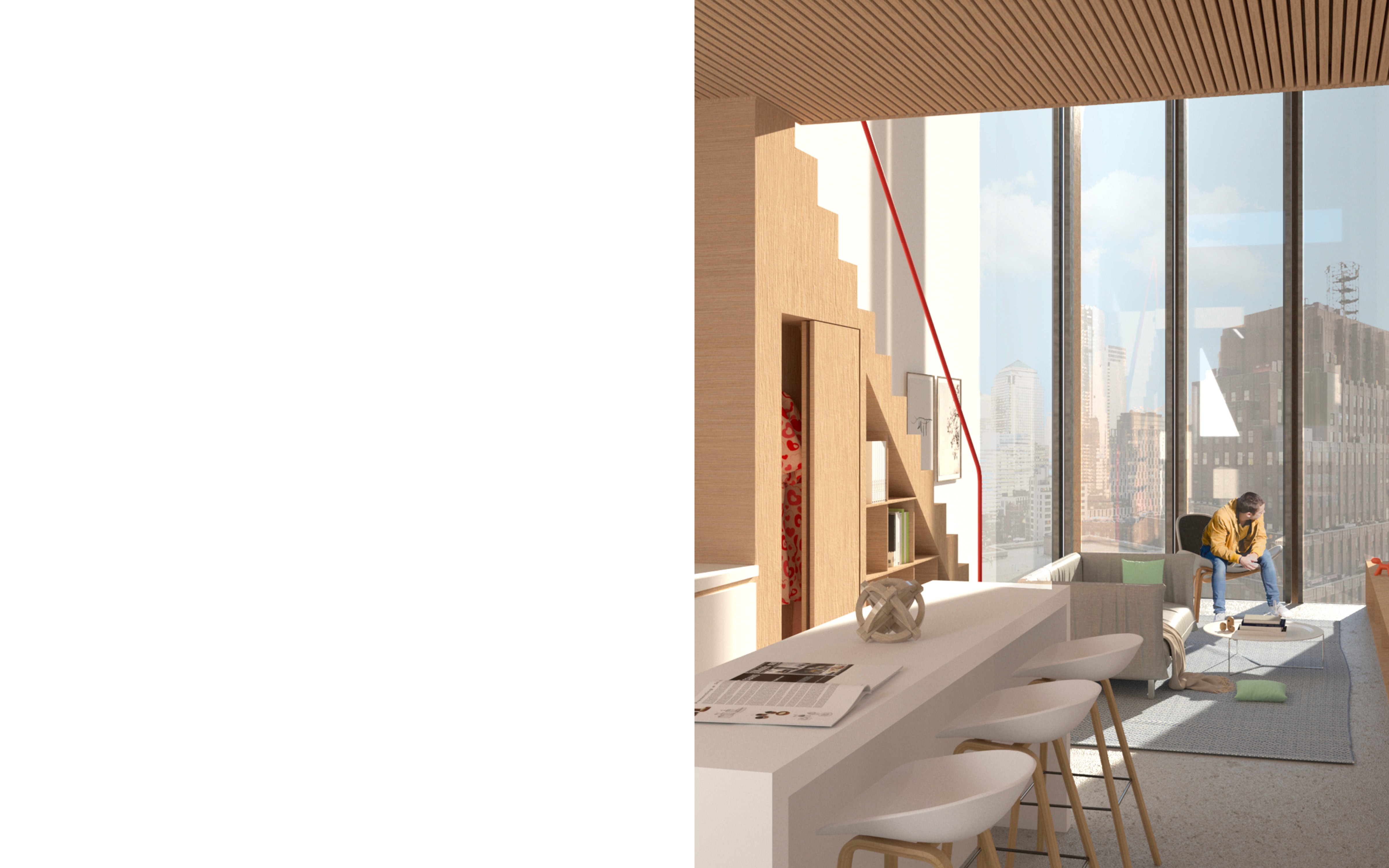
The interventions looks for solutions to keeping the iconic elements of 33 Thomas there, and integrating housing and other mixed use programs into the podium and the tower.
Client Columbia Year 2022 Services Architecture Credits Brennan Heyward Min-Soo Jeon Wonne Ickx - PRODUCTURA (Critic)